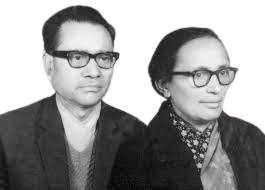
 DHMA
DHMA
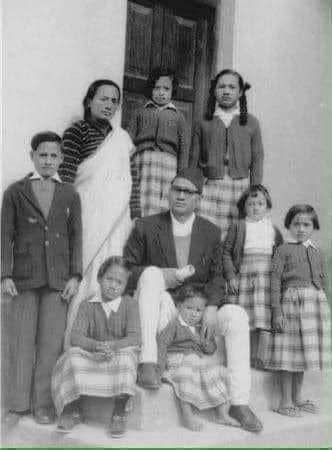
When we think about people who grow up to do big things, we often wonder what they were like as children. Growing up as the youngest of seven children, Hisila was full of energy. My father, Dharma Ratna Yami, used to smile and say that the youngest child always gets away with being playful and restless. In fact, before a scrape on one leg could heal, she would get another one on the other leg!
A Big House with Plenty of Space
Our family lived in a special place. Even though we are Newar, instead of living crowded inside the narrow alleys of central Kathmandu, we lived in a large five-story house surrounded by seven ropanis of land in Bhurungkhel, Ward No. 18, Kathmandu.
Having a five-story house back then was quite unique. Portions of the house were rented out to other families, which meant there were always children around to play with. We had a large private courtyard, and every day was filled with fun and games.
Standing Up in Public: The Bold Speech at Itum Bahal
Our parents, Heera Devi Yami and Dharma Ratna Yami, were brave enough to break strict, orthodox traditions, and my father never hid his beliefs. He spoke them out loud, even in front of the most conservative crowds.
During a massive public gathering at Itum Bahal—one of the oldest and most historically significant Buddhist courtyards in Kathmandu—Dharma Ratna Yami took the stage and boldly challenged tradition. Pointing out the absurdity of Bel Bibaha, he announced to the crowd: "Why? What is the meaning of Bel Bibaha? Hence, all my six daughters never went through it!"
Then, turning his focus to the Gupha ritual, he laid bare just how hazardous, unscientific, and unhygienic the practice was. In those days, young girls were locked away in a small, windowless room with very poor ventilation for twelve days, completely deprived of sunlight and forbidden to step outside—even to use the toilet. Every basic need had to be managed within that single confined space, and male family members were strictly prohibited from approaching.
Under such absolute isolation, if a child fell gravely ill, medical help was virtually out of reach, as health assistants (compounders) were exclusively male and barred from attending to her. Tragically, some young girls did not survive. According to old customs, if a child passed away during confinement, her body was buried beneath the floorboards right inside the foundation of the house—a practice that gave rise to superstitions of haunting and often led families to abandon their homes.
Challenging this orthodoxy with characteristic wit, my father powerfully declared from the stage: "All my six daughters have already been under Gupha inside the stomach of Heera Devi Yami, my brave wife. For nine months she kept them during her pregnancy. So Gupha already took place inside the womb of my pregnant wife. There is no need for any other Gupha!"
When he gave this bold explanation, the crowd at Itum Bahal reacted with a mix of astonishment and uproar.
Walking the Streets as "Children of the Rebel"
The backlash didn't stop at the speech. In those days, transport was scarce, so we walked everywhere on foot. As small girls walking around Kathmandu, people on the road used to point at us and whisper or shout remarks. We were too young to fully understand, but it made walking outside feel uncomfortable.
Our relatives were also deeply worried. Even my mother Heera Devi’s close family members expressed concern, warning her that defying tradition and skipping Gupha and Bel Bibaha meant her six daughters would never receive marriage proposals in a society where arranged marriages were strictly mandated.
Even when our mother chose to purchase a home on the quiet outskirts of the city, people did not understand. But our parents did not care about the social pressure. They wanted to protect us from a judgmental society.
Facing the Storm: My Mother's Unshakable Courage
Going against entrenched social norms was a tremendous burden, especially when confronting religious gatekeepers who benefited from keeping the public bound to costly rituals.
My mother, Heera Devi Yami, faced the brunt of this fierce criticism. Coming from a traditional family herself, standing her ground took extraordinary courage. Yet, whenever people warned her about our futures, she held her head high and answered with complete conviction: "Even if my daughters remain unmarried by skipping these rituals, they will be highly educated, and educated partners will choose them." She urged everyone to reject harmful, unscientific practices.
Looking Back with Immense Pride
Today, all six of us daughters feel deeply proud of our mother, Heera Devi Yami, and our father, Dharma Ratna Yami. Facing those fierce storms enabled us to grow up in a safe, open, and liberated environment. Far away from suffocating social expectations, we had the room to run, study, think, and become strong individuals.
Looking back, I feel profoundly blessed to be the daughter of such courageous, visionary parents. Those wide-open, peaceful days in Bhurungkhel laid the foundation for a lifetime of living freely and without fear.