 DHMA
DHMA
Heera Devi Yami Behind the Tiki Jhya: A Story of Lhasa Newar Women
Traditional Newar houses of the Kathmandu Valley are famous for their beautiful woodcarving. Among their most distinctive features are the Tiki Jhya—small wooden lattice windows through which people inside could see the outside while maintaining privacy.
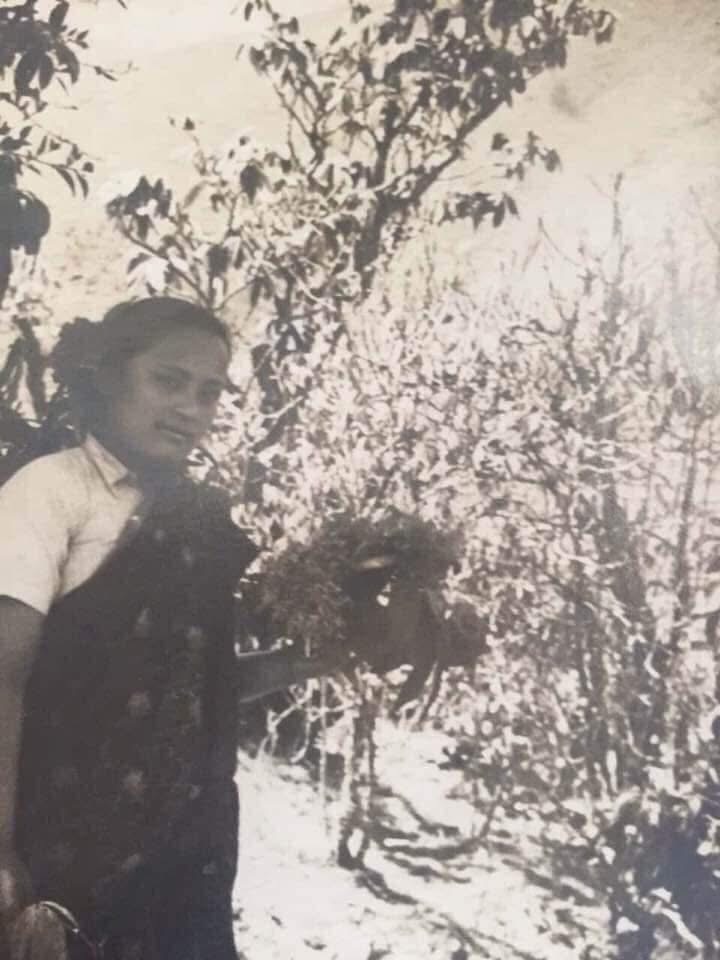
Today, we often admire these windows as works of art. But behind these beautiful windows were people living very complicated lives. For some women, the story of the Tiki Jhya was not simply about architecture. It was about privacy, restriction, uncertainty and survival. This is the story of Heera Devi Yami with special talent , who grew up in a Lhasa Newar household surrounded by such windows.
In her childhood home, girls and women were not simply discouraged from going outside. They were restricted even from going near the Tiki Jhya to look outside. The window that could connect the inside world with the street became, in practice, something they were not permitted to approach.
To understand what this meant, we have to imagine the world in which these women lived.
There were no mobile phones, internet or instant messages. Letters were an important means of communication, but women could not read or write. Education was restricted for general public then. Husbands and other family members could be away for long periods in Lhasa. Information from the outside world travelled slowly.
Life and Communication Under the Rana Regime
At that time, the Kathmandu Valley was unsafe for women and girls to walk around freely. People lived in constant fear under the harsh control of the Rana rulers. To share news without getting caught, people spoke in coded, whispered phrases. One famous Newari saying was "Dese dakko dangra khicha, lona daya sya ta."
What the Saying Means in Newari, it translates to: "All the strongest dogs have been crushed and killed by the heavy stone." Here, "dogs" referred to brave people, community leaders, and free thinkers who spoke out. The "heavy stone" represented the deadly power and violence of the government. A Hidden Warning: People whispered these verses to warn each other safely. Speaking openly about government killings or disappearances could get you killed, so this coded language allowed neighbors to share urgent news without using names. Living in Fear: As soon as families heard this whisper, men and women rushed inside, locked their doors, and hid. It shows how terrified everyday people were of government spies and violence. Preserving History: Oral stories passed down by people like Heera Devi Yami show how communities survived, secretly communicated, and mourned their losses during these dangerous times.
So how did these Lhasa Newar women and girls sustain their lives? How did they manage when husbands were away? How did they communicate when they could not write letters? How did they know what was happening outside? How did they cope with loneliness, uncertainty and fear while living within strict social boundaries?
These are questions that beautiful photographs of old Newar houses rarely answer.
The Tiki Jhya itself should not be blamed for these restrictions. It was an architectural feature that served several purposes—light, ventilation, privacy, observation and security. Nor should we assume that every Newar woman experienced the same restrictions. But in particular families, social rules could determine who was allowed to use the window and who was not. That distinction matters.
A beautiful architectural heritage can exist alongside a very restricted social life. Perhaps this is one reason why we should look at heritage not only through buildings, carvings and festivals, but also through the lives of the people who lived inside those buildings.
The story of Heera Devi Yami makes the Tiki Jhya human.
Behind each carved window were women who had thoughts, questions, relationships, responsibilities, fears and dreams. They were not merely people waiting behind a beautiful screen. They were sustaining families and communities under circumstances that we can hardly imagine today. And perhaps this gives us a larger lesson when we talk to children about our traditions.
Children may ask uncomfortable questions about Taleju, Durga, Krishna, rituals, gender and the lives of women in the past. We should not silence those questions simply because they touch religion or tradition.
We can say: This is what the tradition tells us. This is what historical evidence tells us. This is what we know—and what we do not know. And this is how people interpreted these traditions in their own time. We can respect our heritage without pretending that everything in the past was perfect. We can admire the beauty of a Tiki Jhya while asking what life was like for the woman who stood behind it. We can preserve tradition while learning from its limitations. Most importantly, we can teach our children that questioning is not disrespect. Children need truth, evidence, context and the freedom to think.
And sometimes, to understand history, we need to stop looking only at the beautiful window—and listen to the woman who lived behind it.