 DHMA
DHMA
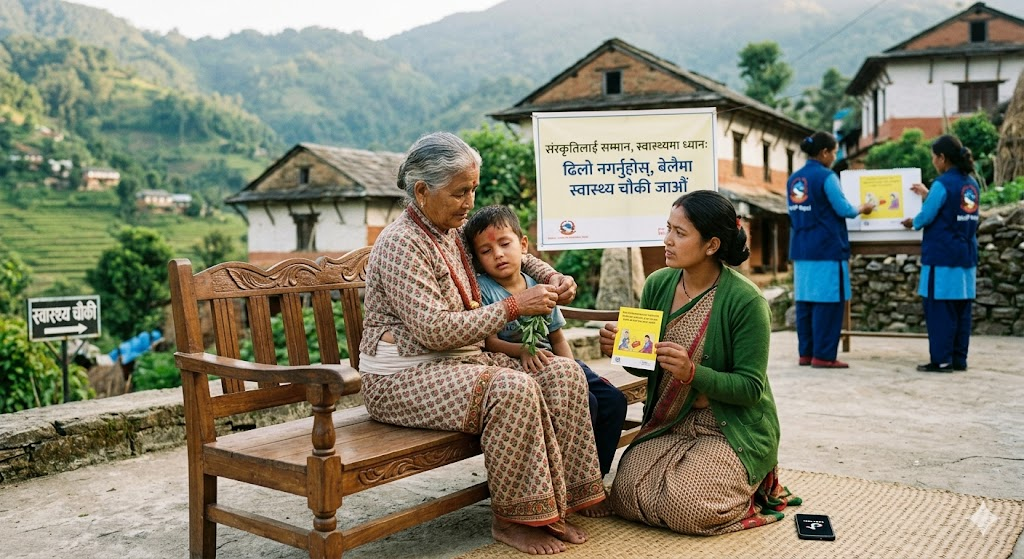
In the heart of Nepal’s communities, a quiet but profound conversation often takes place when a child falls ill. It begins with the wisdom of the elders and ends with the urgency of modern medicine.
Grandmother: “Let’s do the ritual first.”
Daughter: “Yes, Ama. But let’s also go to the health post.”
The Reality: “You don’t have to choose. You can do both.”
This dialogue represents the core of a new, multi-faceted health initiative designed to bridge the gap between cultural heritage and clinical necessity. By acknowledging that care-seeking behavior is shaped by fear, access, and trust rather than just knowledge, this campaign seeks to work with cultural beliefs—ensuring no tradition delays life-saving treatment.
Meeting People Where They Scroll
In an increasingly digital Nepal, social media serves as a primary source of information. This campaign leverages three key platforms to spread high-impact, bite-sized health education. Focus on short, 30-second videos highlighting “3 signs you should NOT ignore” and the physical risks of delaying treatment. Engaging visual storytelling that contrasts the outcomes of early care versus late intervention. Direct, visual posts correcting common misconceptions, such as the belief that prolonged fever is always a normal part of childhood.
Community Outreach: The Human Connection
Digital tools are powerful, but the most critical work happens on the ground. The campaign relies on the trusted voices of Female Community Health Volunteers (FCHVs), mothers’ groups, and local health posts.
Community Dialogues
Moving away from top-down lectures, the program focuses on Charcha (dialogue). By asking, “What do you do when a child gets sick?” facilitators allow communities to voice their fears and practices, creating a two-way street of respect and learning.
Visual Learning
For areas with lower literacy rates, visual flipcharts translate complex symptoms into clear actions. Real-life storytelling—sharing both the pain of waiting and the relief of early treatment—helps make the stakes personal and relatable.
3. Engaging Traditional Healers
Rather than excluding traditional healers, this initiative recognizes them as "protectors of the community." By training healers to identify specific danger signs, the campaign enlists them as a vital referral link. The goal is to empower them to guide families toward medical care the moment a ritual reaches its limit.
4. Institutional & Digital Innovation
Led by the Ministry of Health and Population Nepal, with support from local governments and NGOs, the campaign is backed by robust institutional weight. However, it also embraces the future through AI and Digital Add-ons:
-
Voice Helplines: Offering "What should I do?" guidance in Nepali and local languages.
-
SMS Reminders: Sending proactive alerts such as, "Fever > 2 days? Visit the health post today."
5. Measuring Success
The effectiveness of this movement isn't just measured in "likes" or "shares," but in tangible community shifts an increase in Day 1 visits to health posts, a reduction in late-stage hospital admissions and enhanced trust in local healthcare providers. Care-seeking behavior is shaped not only by knowledge, but by fear, access, and trust. Effective health systems must work with cultural beliefs—while ensuring that no belief delays life-saving treatment.