 DHMA
DHMA

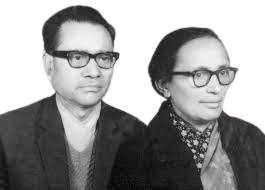
Heera Devi ( wife of Dharma Ratna Yami ) freedom fighter and the great mother:
This is the sad yet courageous story of a brave woman Heera Devi whose contribution to the Nepalese democracy cannot be forgotten. Heera Devi was one of the founders of the First Women's Association of Nepal who fought for the democracy in Nepal and civil rights of the women in Nepal.
Those days, elderly persons in the society used to discourage growing up girls from getting educated: even basic literacy was not possible. The elderly would say “Bhotaan Nawai" in Newari – the language for communication in the Newari community. The phrase would translate in English as the "paper will speak" and " girl will learn to write to lover and will elope." Learning to read books by girls used to be considered a big social "taboo." During a famous ceremony called “Kumari Jatra” (city tour for the Living goddess Kumari. Ranas of Nepal ::https://www.youtube.com/watch?v=qHc2TqtCcZMused to move around sprinkling coins especially around the places where they saw girls. At night they used to depute their people to collect those girls.
In the photograph, Heera Devi is standing on the right side (second row) holding her first child in her arms. The children in the front row were the students of Heera Devi. She used to teach English language at Budhi Bikas School behind Hanuman Mandir, Hanuman Dhokha, Kathmandu where she often had to take school children into hidings while teaching because of being surrounded by secret police agencies. The guardians used to give her food grains in return to support herself. She used to give away those food grains to sick underground activists and the family members of the freedom fighters languishing in the Ranas’ jail system.
During Heera Devi’s first pregnancy in 1946, her husband Dharma Ratna Yami left her at Gandhi Mahila Ashram in Bihar (India), a shelter for women in need of support, while he and his team were busy with underground movement to overthrow Rana regime. Heera Devi had very hard time during her pregnancy. Even the basic staple diet of “chapattis” (Wheat bread) was unavailable due to the limited supply of food to the inmates of the women-shelter. Due to her pregnancy, she could not make her way through the crowd of struggling hungry crowd to reach the distributors of chapattis (wheat bread). Dharma Ratna was shocked to see her skinny body during his next visit to the Ashram, and had to rush her to a nearby restaurant to feed her.
Heera Devi led a protest procession against Rana regime and chaired the program at Maru Tole (Kasthamandap), a historical central place in Kathmandu (Nepal), even when her child was just one month old. She, along with her one month old child, was thrown into jail. Inside the jail, she was placed in a cell filled with male inmates comprising of criminals and political activists without any other female prisoner. The prison-cell was full of bugs without any privacy suitable for female prisoners; the only facility the prison-cell had was a open sky public toilet. The jail inmates could not sleep during the nights due to biting-bugs and mosquitos, unbearable foul smell from the only open toilet, and night-long crying of a hungry one month baby. The situation quickly became unbearable for the inmates, and they went on hunger strike on the thirteenth day of Heera Devi’s arrest.
Heera Devi did not have a single penny to feed her children. She used to enter butchers’ shops and ask them to hand over the throw away bones of buffalo-meat into the shops’ corners meant for feeding stray dogs. She would pick up the bones and tell the butchers that she was taking the bones to feed her dogs. She would dry the bones in the sun and store them in the big earthen vessel (Tepa in Newari language). She used to collect Sishnu ( Nettle ) plant, a leafy vegetable plant, in the neighboring places, and cooked them with dried bones because she didn't have any money to pay for rice or staple grains. This used to be the regular diet even during her pregnancy and delivery period too. The underground activists hiding in different localities also used this food often through her.
During the delivery of her second child in the year 1948, Heera Devi again got arrested. She was taken inside the prison-cell with her newborn baby while she was still bleeding after the recent delivery with blood stains on her clothes. She was forced to stand for eight hours every day for a month in the freezing winter during the month of December in this precarious health condition. Her newborn child suffered from hunger and malnutrition, and soon fell seriously ill due to the extreme weather condition and improper care. All the jail inmates decided to name the baby boy as “Vidhan” to symbolize the struggle for the demand of the first democratic “Constitution of Nepal.”
“Tamnani” is used to carry people especially brides in Nepal, and were carried by butchers those days. During the year 1948, Heera Devi and her newborn were carried in Tamnani for the interrogation by Ranas. She used to bleed in Tamnani due to the recent delivery. She had no spare saree to change. Local resident ChhalKumari Mali , her neighbor and wife of Shiva Lal Mali, used to see her bleeding. Local residents were dead scared of tyrannical Ranas’ police, and avoided going near Heera Devi. Chhal Kumari secretly used to lend her saree, and washed her saree soaked with blood.
Dharma Ratna came secretly one night disguised as a poor peasant pretending to deliver harvest. The condition of both mother and her newborn son was “touch and go”: either could die any moment. Dharma Ratna could stay for only for a short duration to avoid getting arrested. He had to leave behind helplessly his Heera Devi who was playing such an important role during the revolution in dangerous times of Rana regime. Laxmi Tuladhar, the maternal aunt of Heera Devi, decided to rescue baby Vidhan by shifting him to her residence. Baby Vidhan survived and recovered slowly due to the good nursing provided by Mrs. Tuladhar.
Dharma Ratna Yami, her husband, fell ill with tuberculosis at Nakhu jail because of malnutrition and physical torture. Heera Devi used to walk for six hours(two way) to reach the prison (Nakhu jail) to feed her ailing husband and help other political activists with serious ailments. At the same time, she used to teach farmers’ children. There was no one to look after her two small, desolate and crying children while she was away. She used to lock behind her two small, desolate and terrified children due to the fear of Rana’s police-men who used to terrorize her children. The desolate children would eat, do toilet, sleep and cry the whole dayin the same room. People around never gave helping hand because of the fear of getting tortured by police constables.
In summary, Heera Devi and her children had to pay great personal price in the freedom struggle of Nepal against the Ranas of Nepal. Yet, they managed to live, contribute to the freedom struggle, and survived to tell the tale of hardships during the period of Ranas’ tyranny.