 DHMA
DHMA
Because of lack of time I have not been able to look at this article properly. Please excuse me for this .
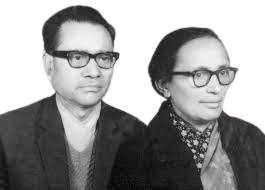
I stiill remember the days when my mother Heera Devi used to be bed ridden. My mother had tough time with two of her heart valves damaged and also suffered from acute asthma before her death (A.D. 1970). Watching mother in such a vulnerable state used to be terrifying for all of us. She stayed brave through her last days, however, leaving behind seven children at such vulnerable ages was heart breaking for her. After all, she was the strongest person I have ever known. She used to take charge of every thing including managing the finance for the family which she used to manage mostly through renting the house. Every time she ran short of money she used to add rooms ( concrete structure over very old traditional building materials as per the advice of old traditional builders of Nepal for cleaner space etc ) rooms for renting spaces in order to educate her seven children and manage fanances for the rest of the house hold expenditures. She had always kept my father totally undisturbed with house hold tensions including financial tensions so that he could devote all his life for the development of Nepal and continue with his passion in writing books. ( Dharma Ratna Yami , Dharma Heera Memorial academy Dharma Ratna Yami (WIKIPEDIA) ) He used to be known as a powerful speaker both in reginal countries and Nepal. My mother had brilliantly handled singe handed in raising seven children and looking after a husband who had enormous energy in mobilizing the citizens of Nepal for political and social transformation. She was a true example of "strong mother, dedicated wife and a role model for the society" . She had enormous capacity to bear any kind of obstacles during painful peried of her life. Even when there were tears in her eyes, she knew how to say she was "OK" and "FINE".
http://www.dharmaheera.com/all-stories
As she became very ill and realized that her days were counted she started worrying a lot because my father who led a life inside the family managed by my mother and had limited experience of looking after seven children and managing house hold problems. During last three years of critical health conditions she used to share all her worries with me and other siblings. My elder sister and brother were both studying in India during that period and I was the eldest one among the remaining children in the house then. We five sisters were young to understand the pain and the sufferings of my ailing mother during her counting days.
My father used to be a person who spent all his life preoccupied with deep desire of fighting for citizen rights specially fighting for the rights of disadvantaged groups. Our house used to be a popular place for interactions among politicians, writers and social workers. My mother used to cope up despite facing lot constraints to handle the situation which I suppose must have been the typical cases with wives of dedicated persobalities who fights for the citizens of the nation.
Among the visitors in our house Pandit Rahul Sanskrityayan. (Rahul Sanskrityanyan ( https://www.youtube.com/watch?v=FGwZpCzmwcQ ) He had stayed in our house during couple of visits to Nepal. He had also written biography about my father. Rahuljeee had traveled from India to Lhasa with my father and used to live there together. My father was popularly known as a very poweful speaker in India and Nepal. He used to be invited as Chief Guest in many programs of Dr. Ambedkar ( https://www.youtube.com/watch?v=yv6aU-_9xQ0 https://www.youtube.com/watch?v=dFaAzrayGSI ) in India. During his visit to Nepal in 1956 A. D. Dr. Ambedkar too had stayed in our house. Our house is populary known as " YAMI CHHEN" YAMI CHHEN .
My father used to be invited by renowned freedom fighters of India from cities of India for delivering lectures in Buddhism , culture and regional issues. He wrote a book called "Buddha Darshan Ko Roop Rekha" in the year 1934 A. D. This is a book popular among research scholars who specialize in Buddhist philosophy. He also authored "Maha Manushe Buddha" in both Hindi and Nepali language. Ten local people were expelled from Nepal ( http://www.academia.edu/648144/The_Newars_the_Indigenous_Population_of_the_Kathmandu_Valley_in_the_Modern_State_of_Nepal ) during Dhamma Lok Bhante's period in spreading Buddhism in Nepal and Ranas called Buddhism as "foreign religion" and people didn't have guts to protest in the land where Gautam Buddha was born. In 1951 when my father was deputy Misiter for nine months an ash of Gautam Budha was brought from Srilanka to be burried in Anandakuti Bihar, Swayembhu, people rediculed this ritual saying " woen yagu dese koyen yagu jatra" . This is how peope used to be brainwashed to think against Buddhism in Nepal those days. The first Buddist magazine produced by Nepalese people was printed secretly from Harshan road , Bada Bajar, Calcutta and used to be distributed secretly in Nepal.
This country is remembered as a nation cursed by Satis. People tell us horror stories of "Sati Dhunga". The descendants of designers of such cruel system still continue to have grip over weaker section of the people. Nothing will come out of honest people's sacrifices. I have observed in the past the peer groups of my father fading away without the historical facts of their brave sacrifices being included in the history of Nepal. People who tried to reform traditional unscientific practices of social system and improve the governing system of the nation, sadly, remained in the minority and perished. Those class of people who suppressed innocent citizens lived and enjoyed corruption. Their ancestors appear to have perfected this art and handed it down to their future generations. Insane and incompetent people have mostly ruled people of Nepal. So corruption flourished. Corrupt people have become more powerful. Corruption will be further institutionalized in the land of Gautam Buddha. Citizens are speechless, powerless and have continued to keep quiet.
https://books.google.com.np/books…
My mother expired in 1970 at the age of 48. I remember one of my father's cousin sister Lani Devi Nini crying bitterly sitting next to my dead body of my mother saying " Who will look after the father of these seven children who had always been kept as "8th child" (youngest ) "ALWAYS SO PAMPERED" by his wife Heera Devi. He has no idea of managing the house and looking after seven children".
My mother throughout her life advocated on the need fighting for the law of property right for daughters because of the pathetic plights of daughters of the Nepalese society. People failed to understand her views during her life span tenure. Along with her passion to educate girls of the Nepalese conservative families including children of the marginalized groups, she had been spreading awareness campaign on importance of property right of daughters also. To make people understand the concept of "WALK THE TALK " she started the process of preparing legal document to hand over one Ropani land for each of her all six daughters, however, her sister in law (first cousin sister of her husband) Moti Laxmi Upasika who knew the government process blocked her effort from finalizing the registration process in the property registration department of Nepal government. Heera Devi' s first cousin sister Ratna Shova Shakya ( daughter of her uncle Ratna Man Singh Kansakar ) was keen to see that Heera Devi's this wish materialized. In 1970 A D before Heera devi passed away, during the time while she was battling for her last breadth, she was crying asking her daughters to bring Moti Laxmi so that she could instruct her to finish off this legal steps of property transfer for daughters. She particularly relied on Moti Laxmi because she was the only person who knew more details of government processed more than her close relative circles. Heera Devi had also told most of her relatives and friends circles regarding her wish on this issue. The document remained in the hands of Heera Devi's daughter in law who had all Heera Devi's property transfered refused to hand over the property allocated for daughters to fulfill the wishes of Heera Devi.
Ratna Shova Shakya always felt very sad about the last unfulfilled wish of Heera Devi on property transfer to her six daughters. Ratna Shova Shakya who died in year 2015 A D at the age of seventy nine, had made a request to record her talk on this issue and publish it in magazine to inform the sad unfulfilled wish of Heera Devi who remained always the first women to raise the issue of need of the policy of property right of daughters in the history of Nepal.
I entered IIT K in the year 1970. I used to receive very painful letters from my four younger sisters. I used to be grieving about the loss of my mother and worrying about four younger sisters including my father. I even thought about leaving IIT K every time I read letters of my younger sisters. After completing first semester of first year of B. Tech program at IIT K I came home to spend my vacation. My father, who was heavily engaged in book writing and politics, was facing lot of problems at home. As usual he used to be engaged mostly in outside world including delivering lectures. One cannot be perfect in every thing when he had such deep passion on writing books and serving citizens. Our house always used to be filled with people. They used to missed my mother too who used to take special care of the families who suffered during revolt against Rana of Nepal.
My elder sister Dharma (Medical student ) and my brother Vidhan (Engineering student ) were both studying in India. There were four younger sisters at home. Seeing the pathetic condition of my sisters I decided to collect youngest sister Hisila ( Hisila Yami ) who had just completed class six from Kanya Mandir High school Chhetrapati, Kathmandu, Nepal. In the hostel I used to share my problem with a Ph.D student Savita Gupta who used to give me good advices regarding Hisila. With lot of difficulty I managed to admit her in class seven at Central School. I am so thankful to Late Professor Narsimha Rao of Chemistry department of IIT K for his special effort to allow Hisila to study at Central School at IIT K Central school IIT Kanpur. He was in the board of that school then. :http://www.kviitkanpur.org/in side IIT campus.
The Principle of Central School had refused to admit her in a class section which had medium of instruction as English. They allowed her only in a class with Hindi medium of instruction. This situation put me into lot of tension with sleepless nights because I was not sure that I would be in a position to continue keeping her in that school. Any time if any thing happened then she would have had to return to her old school of Kathmandu disturbing her education. Every one would pounce on me for taking such risky decision if any thing went wrong then. I went and begged the administration of that school to shift her to the English medium section from Hindi medium section, however, the school principle refused to change the section for her telling me that she didn't have English back ground. Hisila also realized the dimension of the problem and tried very hard to pick up English. I used write the required few dialogue in English. She used to learn them by heart and speak them out in class without any fear. It was such a scary thing to take such step at such tender age when she hardly knew English that time. She learnt how to tell boldly all the teachers to repeat every thing that was taught in Hindi once again in English explaining to teachers that she had good knowledge in English and no knowledge of Hindi. All her teachers then went and complained to the Principle asking him to shift her into English medium section. She faced real tough time because of switching from Nepali medium school to English medium school. She really demonstrated her boldness and the Principle had no choice but to listen to the decision made by her class teachers. There was one compulsory Hindi subject and she had no idea of Hindi making the situation even worst. It was indeed a very tough period for her and she made it. She really saved me from packing off from IIT K for good had she not faced every thing bravely then. School fee was only only Rs 2/- per month.
The warden of IIT K girls hostel also refused to provide a room for Hisila because children were not allowed in adult hostel. I never knew that I would run into such serious multiple problems whih disturbed my studies. I got caught up with such multiple problems at one go. After lot of persuasion I managed to get permission for Hisila to stay in that hostel. It was indeed a great miracle of that time in my first year that Hisila was allowed to stay in girl's hostel. Luckly there were plenty of empty rooms available during those days. It was a real turning point for our lives.
The school used to take Hisila and her team mates for All India Junior Sports competition. I used to be horrified with troubled mind because recall my mother telling us that girls are often stolen in India. I used to go and protest in front of school administration begging them not to take my sister for such sports programs in different parts of India telling them that "MY SISTER WILL BE STOLEN ". They used to take her in spite of my protests because she had the capacity to bring shield and cup awards for the school. I used be very frightened, disturbed in my studies and in my sleep whenever she went to participate in games tournanments in other sates of India. I couldn't even inform home because I had brought her at my own risk. She was very good in sports and received games scholarship @INR 10 / month in that school.
I was enrolled in Electronic Engineering program that was considered the top engineering program of the nation and attracted the best students and top rank holders of the All India Joint Entrance Examination (JEE ). I faced very difficult situation continuously managing double burden at a very young tender age, however, I matured faster. Had I taken help from my youthful batch mates , the life would have been less stressful. However, I was very apprehensive then. Had I messed up in my responsibilities I would have landed no where and nobody could have saved me.
Faculty members of top institute of the nation has very high expectations from students and grading was very harsh; relative grading among top students of the nation made life even more difficult. However, most of the faculty members, very strict in academic matter, were very helpful and nurtured students to unleash the maximum latent potentials in every student in the campus. This was place where students and teachers were equally enthusiastic to share a happy moment together outside class.
There were 410 boys in my class and only two girls. My batch-mate Vini was the only person I could communicate, however, she used to be in different section of the same batch. She would often used to find me grieving about the loss of my mother at night and would advice me to go back home because she probably felt bad the way I used to be loaded most of the time with my family tension. I never shared my problems with my other batch-mates. Instead of studying hard in my courses I used to be spending most of my time teaching Hisila so that she could catch up in her class and communicating with remaining sisters at home through letters by postal service.
My worst days at IIT K was when the hostel warden abused me in front of my class mates in campus corridor when I could't pay the hostel Mess Bill for four months (partial payments). IIT education pressure and the embarrasment of financial crisis !. I used to get the scholarship but that money was not enough to support for both of us. We used to wear clothes I used to buy from shops selling cheap quality materials. When my mother was living she used to advice us not to wear fancy clothes and stay simple. We six daughters carried on with that mentoring from my mother even after her death.
My mother had planned well before her death regarding possible financial crisis in the family. She had extended more rooms in the building in order to have more income to sustain the family so that my father remained free from financial burden after her death. However, he was not hard wired that way. Any financial deals and complexities he would ask others to handle and dissociated with money matter. This is the part we could not understand about my father those days - may be first stage of Buddhism. This is the typical case I suppose how wives and children suffer in the hands of such intellect personalities. For example Yeshodha begged Buddha to understand the feelings of her son when he refused to allow his son to enter in the "SANGH" directly and told him to come through the decision of the "SANGH". During those moment how Rahul would have thought about the father?. It may be similar feeling we children carried. Why didn't my father focus more on seven children after mother's death those days?. Was it right ? Choosing ideology between my mother and father I got influenced more by my mother as per typical culture of Nepalese society. I was always mother's daughter than father's daughter. My mother's role model influenced me more in my life all the time. Instead of focusing on family responsibilities he devoted all his energy to give vision to the society. We were too young to understand all these details during those early days of our lives.
All the complexities I face at IIT K taught me great lessons, however, I used be frightened most of the time. There were no telephone connection between my house and IIT K those days. Postal services were poor. My father used to be in his own world and not aware of what problem I was facing at IIT K.
The interesting thing I observed in the girls hostel was boys entering the guest room and warden Mrs. Nanada getting very worried. This became a big news in the campus and warden Mrs. Nanda tried stopping this and also restricting boys hanging around the premises of the hostel. There were girls working in research labs and spending late hours in library. Every year we have All India Cultural program being organized by the Student Gymkhana in which large numbers of colleges from India participate in various cultural programs attracting media people of India. Parents of the hostel became furious when there was couple of media overages regarding boys being allowed to hang around in the premises of girls hostel and also inside rooms. I think this was the first hostel in India which allowed such practices those days. I do recall some mothers got very scared of this news because they came from conservative communities. One girl student who completed M. Tech. told me that her parents had tough time looking for a boy for her and boy's family was asking her parents for larger dowry because she was over qualified and limited choices. The boy's family felt they could bargain for more amount. She was complaining that some families demand larger amount of dowry after their sons get degree from IITs of India. In contrary some girls with IIT degree from conservative communities have to pay more because they are considered over qualified. Industries those days also used to discourage recruiting girls in engineering field.
Most memorable incidents of your IIT K life was meeting Mrs. Meera Parasnis, wife of Professor A S Parasnis of Physics department. Her son was Hisila's classmate. The transition from Nepali medium school of Nepal to English medium school of IIT K was really tough for Hisila. I had gone to borrow children's books in English at her flat so that Hisila could pick up English fast. I was so shocked to meet her because her nature resembled with my own mother so much. She was filled with compassion and both the couple liked Hisila a lot. Loss of my mother and finding Meera auntie was really like finding my own mother once again in my life. When I was grieving about the loss of my father in 1975 two weeks before my semester examination, she was the one who looked after both of us during such crisis time.
I appreciated the role of Counseling Services of IIT K . My student counselor Prof. R Sharan and his wife Raka Sharan used to give us lovely food while mentoring students. My student guide Neeru Mohan , a final year student, helped me in minimizing the gaps of English standard of Nepal and IIT K. I had to wait for Hisila's completion of her Higher Secondary Board Examination and had to sponsor for her Architecture course at Delhi School of Planning and Architecture. I too had to sponsor for my another sister's (Kayo) Ph. D. program at IARI https://en.wikipedia.org/wiki/Indian_Agricultural_Research_Institute https://www.youtube.com/watch?v=gOG-fjJuqdk , New Delhi. I am very grateful to Professor T B Vishonathan for offering me the job after graduating from B. Tech program in EE Engineering for a tenure of three years in a research project, Department of Electronics (DOE) under Government of India at IIT Kanpur. Both of my sisters managed to get scholarship after two years and I became free from financial burden and I left IIT K for good.
Technological adaptations like Digital India and economic reforms has fueled the growth world wide. There was a big demand for specialists and skilled manpower both inside the country and world wide. My batch mates excelled in both in studies and extra curricular activities. Teachers and learning methods were really good. Faculty members gave environment for students to excel in flying club, electronics club, dramatic club, music club, debate, sports club and photography club etc. This was a place where we organized national-level student festivals spanning technology, arts and sports, primarily on our own (with help from administration), inviting participants and popular personalities from all over the world. This is the place which gave students chances to go through experiential learning and a place where either we taught ourselves the responsibility that came together with this freedom, or were made to learn this by experiencing the consequences of our actions. We could cherish both in the long run.
Most of the students being toppers in their respective schools felt like each one having a magical world of his/her own and princely positions of the previous schools, some of then got the shock out of the life when faced with times, getting scores in examinations lower than peer groups. Many good students lost confidence in tough competitive environment. I used to live daily with a lingering painful memory for having witnessed some students loosing mental composure and five students committing suicide due to imposed academic burden and competition among best students. I can never forget senior students telling me witnessing the brain of a senior student littered on the ground floor after he jumped from 8th floor of the faculty building in the campus. I used to feel very scary in that campus. It was painful to remember some of the brilliant students loosing interest in life too. The burden to prove oneself was very heavy and not without peril. I also saw large numbers of students got transformed because of the blend of highly competitive academic environment and leanings from extra curricular activities.
As a society, we have yet to recognize and appreciate the emotional and psychological needs of humans. Sadly, many people have been tortured and induced with depression, anxiety, post-traumatic stress, obsessive-compulsive disorder etc. Perhaps, many human troubles would be lessened if the emotional needs of infants and mothers understood. This applies particularly to attachment needs and the effects of separating human children from their parents.
Here I am writing about one batch mate of Hisila (while in class seven) , daughter of one of the faculty members of IIT K. This incident took place during Hisila’s schooling days. The mother of Hisila’s batch mate came to Kathmandu to meet Hisila as soon as she saw Hisila and her husband with President Obama during their official visit to USA in Television. She became very excited and flew to Nepal to meet Hisila (first lady then ) at the Pri Minister's (her husband) residence in Baluwatar, Kathmandu. I took her to visit Pashupatinath temple where we sat down for two hours and decided to discuss about our IIT days. She recalled IIT family as wonderful collection of people. Among them, there were special faculty members who always saw to it the people's problems were solved withing the campus communities. Her unique experience she said was one of them.
She narrated her story about her bitter war she went through with her husband who was a full Professor of IIT K, a brilliant man, so called the faculty member of IIT inside that campus. Her two daughters studying in Central school were taken to her husband's family to be raised by them in his home town in south India without her consent. She used to be locked up in the quarter at IIT K. She tried every means to get her children back to her and her request was out rightly rejected every time she demanded. She went into acute depression. She tried taking help from other faculty members, however, her attempt failed. She then went into hunger strike in front of Director's room of IIT K with the hope of getting back her siblings. The institute management was compelled to pressurize that professor to bring the children back to her. When the two daughters were brought in front of her she was shocked to face the unusual behavior of her two daughters. She discovered that those two daughters were fully brainwashed to think against her.
Over the span of one year those two daughters had totally changed attitude towards mother. They were instructed to abandon the mother. The crowd around her surprised the children and the father who pretended as if he was always badly harassed and constantly being in tensing situation caused by this woman. Supporters of her father told these two children "Look your mother's hunger strike in the IIT K is putting your father into shame and tension ...look he is breaking down in health etc etc". Both the children believed what they were told after observing the crisis going on at that time. The mother became so helpless in front of the crowd. Even some of the families of other department teachers participated to abuse her saying she was at fault. She was already in depression. On top of this all these behaviors added even unbearable pain to her mind. The attitude of siblings, who were not mature enough to understand the feelings of the mother, made the situation even worst. To make things worse some people around her abused her calling her hopeless mother and hopeless wife. How broken hearted must have the mother when her own children for whom she had fought for, turned their back against her. The mother was abused in front of students, teachers and people. The daughters also heard them saying "Look look even her own children hate her from their heart !!".
The devastating mother’s only ray of hope then was Hisila, a very close friend of her eldest daughter. Hisila, who had gone through the pain of losing her mother at such tender age felt very sad looking and analyzing the plight of that crying mother. The father tried to convince Hisila requesting her friend and the sister to go back to home town in South India. The mother had given up hope of winning the two children back. When Hisila was in front of both children, she was wise enough to understand the feelings about the mother and told the elder daughter - her batchmate "Look mother is far more important for girls than father. It is very important to grow up with mother than with father at growing up age. I suffered so much because of absence of mother. Her absence made such a difference in my life. Do understand the pain of your mother's sentiment?.” This statement of hers touched the minds of both children and they both started responding to mother's feelings.
At Pashupati she was crying saying "It was Hisila who saved my life". She elaborated how women get blamed when relationships collapses with no fault of hers.
Hisila knew what life was like without a mother. The motherless child Hisila was able to explain her experience and her difficulties she faced not having a mother and was able to convince the daughter to talk to her mother. A mother’s love and emotional availability shapes up a developing children’s brain. If the children had stayed with their father then they too might have turned to abusive adults. Who knows later as per the fathers abusive nature could have ended up harassing his children.
I have also observed students who have been able to develop different perspectives through various experiences gained from activities of the campus. Excelling in academics alone may not make students successful in the long run. To emerge as a true role model in the society, it is very important to adopt people skills too. As my class had all the toppers of India, some how, I was very shy because I came from very conservative family from Nepal and I kept aloof from my batch mates for quite long time. It was towards the end of the program I repented for not having shared my problems with my batch mates.
Best part of IIT K was to be with Professors of IIT K who always ensured that the potentials of each and individual student were well unleashed. They all used to be with students in play grounds and various students' clubs after class hours. The students were very focused in studies and excelled in extra curricular activities. This environment not only transformed my life but also helped my sister Hisila in all round development. The best part was Hisila not only did well in academics, she also excelled in sports, musical instruments, dancing and singing, In the hostel Basundhara Chaudary, a Ph. D student enjoyed teaching her Sitar. Other girls would teach her Bharatya Natyam, Kathak dances. Some would teach her Gajal and Hindi songs. Sandhya Deo used to enjoy teaching her Table Tennis. Kalpana Mehata used to take Hisila to boys hostel for watching sports competitions where the professional couches of IIT also used to enjoy teaching Hisila games. The coaches of IIT K used to appreciate the knack she had in picking up sports and excelling in them. She used to be selected as one of the best athletes in her school used to succeed in bringing sports awards in all India Junior Sports Competitions in various states of India. I am very grateful to the girls of the IIT K hostel who loved Hisila and they used to call her their "darling little sweet bubbly girl". Some of those girls used to be very good in sports, music and other extra curricular activities participating in Inter IIT competitions and Hisila used to play with them too. Those girls enjoyed developing Hisila in all those extra curricular activities of their interests because her pick up was very good. She literally grew up dancing, singing and playing Sitar and Harmonium. No wonder when she later became Minister of Tourism in Nepal she went and did Bungee jumping in Nepal. She also did Bunjee Jumping in New Zealand when she officially visited. That is the country where the Bunjee Jumping started for the first time in the world history.
( https://thehimalayantimes.com/news-archives/latest/yami-takes-a-plunge-2/ ) ( https://www.youtube.com/watch?v=4XxmkEpAbDc 0 )
I brought two more younger sisters Nhuchhe Shova ( who is currently retired from a post of an Associate Professor, after serving as as Campus Chief of Thapathali Engineering Campus under Thapathali Campus, IOE ) and Kayo ( who is currently retired after serving from the post of Chairperson of Public Service Commission Nepal ) to IIT K Girls hostel. Kayo spent three months to prepare for All India Entrance Examination for her Ph. D. program in IARI, Delhi. Nhuchhe Shova spent three months preparing for her B. Sc examination. She was finding tough time preparing her examination at home because of her in laws were discouraging her to study. They both had an opportunity to understand the best academic environment of IIT K and understood the importance of quality education. The girls in my hostel used to tease me saying " Timila how many more sisters are leftover at home who will come to stay in this hostel??"
Some girls of my hostel used to invite me and Hisila to spend time with their families during short holidays when it was not feasible to go back to Kathmandu. During those visits I used to observe grand mothers of my friends some of them in early nineties reading Times of India and many magazines. I used to get shocked to see the level of education of grand mothers of India during those days. During my vacation I started exploring the education level of my own relatives. We come from Newah community of Kathmandu valley ( Newah ) From my own maternal side all aunties had not gone to schools in their lives. During Rana regime in Nepal education was banned for a period of 104 years for general public. I discovered that one of my mother's first cousin had got married only when she was six years old. I started realizing that we six daughters were under very conservative aunties who wanted to act like " mini mummnies" in absence of my mother giving strong advises saying that we daughters should go through early marriage settlements because as we run out of early marriageable ages we will have tough time getting married. More the girls get higher degrees tougher it gets for marriage proposals during those days. When my mother died all relatives thought that we sisters should be packed off for marriage before any complexities appear. They did not appreciate me studying in India. They did not understand my shifting sisters to India and did not appreciate the benefits too.
..........................................
My father's grand father used to be one of the rich category of people of Kathmandu valley having flourishing business both in Kathmandu and Tibet along the silk road. However, it used to be a trend to loot people who are prospering in business by Rana rulers. My father's grand father was among one of them. When my father's grand father Late Ratna Das Tuladhar was looted by Ranas his entire faliy members became penny less. All the four daughter in laws of Ratna Das had to bring up children in maternal houses. The family suffered heavily The health of Ratna Das crippled after this financial disaster and died. Only families of Newah communities who partnered in suppressing Newah communities were allowed to be recruited in government jobs. The sons of Ratna Das worked even harder in Tibet and Kathmandu to recover the property loss. My father too went to Lhassa at a tender age of fifteen. It was during this trip that he met Pandit Rahul Shanskrityanan. He spent his youthful days with Rahuljee in Lhasa and this opportunity helped him open up his knowledge horizon in Buddhist philosophy.
My father and his first cousin https://en.wikipedia.org/wiki/Chittadhar_Hridaya began their literary career when the Ranas did not permit writing in Nepal Bhasa, so authors published their works from India and abroad. Chittadhar_Hridaya was jailed in A.D. 1941 for five years by the Rana regime for writing a poem in Nepal Bhasa in a crackdown against the language. ( http://www.academia.edu/648144/The_Newars_the_Indigenous_Population_of_the_Kathmandu_Valley_in_the_Modern_State_of_Nepal )
My father's book - Sandeya Lisa - written in Nepal Bhasa which was written in early 1940 could not be published in time for similar reason. People who tried staging cultural program based on this book and they had to abandon the show because of the threat by the government authorities. This popular book is in now translated in Nepali , English (Reply from Tibet https://www.youtube.com/watch?v=H1mcCm4I2o8) and Chinese language. Hindi translated verson is also ready to be taken the press.
Chittadhar's sister the first lady writer ( ( in the histry of Nepal ) of Nepal Bhasa Moti_Laxmi_Upasika devoted all her life in writing books promoting literature.
From my father's relatives side we had an aunt who continued studying in spite of pressure from families to get married. Similarly another aunt's daughter did the same. These two were the first ladies in the history of Nepal to be the first women Ph.D. holders from UK. They both had very tough time getting married. My father's first cousin sister landed up getting married to a Britisher in UK because her parents objected to her plan for inter-cast marriage within Nepalese community. His first cousin's daughter got married to a boy who come from outside cast. These two marriages of highly educated ladies of our family sent out shocking news among our conservative communities. Marrying outside our cast used to be taken as a big shame during those days. After these incidences the remaining daughters of our uncles from four grand uncles from mother's and other cousins from father's side were married off at very early age after class ten and some after class twelve due to the fear that they would not get suitable boys within the cast if they run out of marriageable ages. One of my cousins even cancelled offer for scholarship for medical degree from government and got married. They also used to put pressure on us to get married right after my mother's death. We were too young to understand these marriage complexities of conservative communities from business class families.
Inter-cast marriage used to be a big social taboo in our community. Four of us got married outside caste. We became real bombshells for the conservative communities of Newah society. Relatives really abused me when Hisila got married with Dr. Babu Ram Bhatttrai ( https://en.wikipedia.org/wiki/Baburam_Bhattarai ) . All my relatives pounced on me asking me why I dd not stop Hisila's inter-caste marriage that too who he came from rural area. We Newahs constitute a community whose ancestral home is the Kathmandu valley and this community don't like mixing of communities from rural areas.
Among four sons of Ratna Das the third son Man Das contributed a lot in the family in recovering of the loss of property by working very hard in Tibet. After his retirement from family business he devoted his life in Buddhism. After his death his son Sukad Das Tuladhar established a first Bhuddhist library in the history of Nepal. The name of the library is called Man Das Bodhi Gyan Pustakalaya, Kimdol, Swoyambhu Kathmadu.
My father was a radical social reformer and wanted to abolish unscientific rituals of our communities.
https://www.facebook.com/ ajplusenglish/videos/ 1056674397807400/
My both parents broke the traditional ritual of " Ehee" and " (Bel Marriage - Bel Bibah ( Bel Bibah ) ." Bel Bibah (video) and Barha ceremony Gufa ceremony by abandoning such unscientific ritual for their six daughters. My father announced in one of the public speeches saying my six daughters will not be locked for 12 days in " Ehee " ritual because all his six daughters have been kept locked up inside stomach for nine months each before delivery by his wife. All the conservative Poojaris became wild and brainwashed the community people to keep away "Yami" family. Those days people used to call my parents "mad" people. When my mother was a little kid she always remembered her house known as a haunted house because the earlier occupant of that house had a daughter who had died during "Ehee" ritual which bans the girl from sun rays and male members while she is kept in a room for twelve days. As per the ritual the girl was not allowed to be treated for any health related problem because male members are not allowed during those twelve days. In those days there were no medical doctors available except for very few health workers and there were no female health workers in Nepal during those days. The girls who fell ill during twelve days rituals used to die without treatment. As per the practices the dead body had to be buried right below the spot where the girl died. The floor of the room had to be cut open on that very spot and brought down to the ground and buried. The girl mentioned earlier fell ill during twelve day "Ehee" ceremony and was buried on the ground floor in the same process. Since then it was said that house used to be troubled by ghost. This way in the past girls used to die during 12 days of "Ehee" program due to lack of treatment. This is happening even now in urban as well as rural areas in Nepal.
When my mother fell ill critically before she expired her well wishers suggested her to get daughters married off. Because the daughters have not gone through "Ehee" and "Bel" people scared her that the community poojaries will block marriage proposals for daughters from such radical families. Even now it is the general practice of the communities is to take advice from the poojaries for decision on permission of marriages. Some relatives even challenged my mother that no families would marry six daughters.
What I had often seen during my early days of my life (from my personal experience of being born in a business class family ) is that these people had NO problem being friends, coworkers or even best friends with people of other race/caste. The problem and disdain arises even these days If the same social relationship extends to marriage, which reflects the deep rooted notion that one cannot marry inter-caste because one's caste is more superior than the other. Inter-caste marriages are still so problematic and frowned upon.
When my brother in law a fresh graduate from ( https://website.aub.edu.lb/
In our business communities trend of the boys those days used to be to taking over business responsibilities of the family at early age and hence education was not in their priorities. Boys also didn't go for higher studies. Girls and women were not allowed to take up jobs. When I got selected in IIT K my aunts tried convincing me that I would be over qualified and no boy would marry a girl who is more qualified than a boy. They also told me that I would not be allowed to take up job after my degree. I attended a marriage party of my friend when we were in class four. Most of my school class mates were married off before class ten. All these used to confuse me a lot. However, I was very determined that the direction given by my mother before her death was the right one and left for IIT K instead of opting to agreeing to get married and producing seven children like my mother.
I used to be the youngest student among the members of National Development Services (NDS) among all the schools of Kathmandu valley. I was class four. I can never forget my days when my mother made me join army training (three months) in morning hours at Tundikhel, Kathmandu. When I was studying in class ten I used to wear army uniform and pass through Asan areas ( market center of Kathmandu valley ). People specially from our communities used to come and watch me with great shock in this dress. The normal practice of our communities for any young girl like me used to be dressing up with lot of jewelries so that other families with richer back ground start sending proposals for marriage. My mother those days used to make us do just the opposite of typical traditional community practices because probably she wished us to grow up becoming "change agents" in the Nepalese society. My relative aunts used to scold my mother asking her to stop sending me for such training. Such practices were against the norms of our Lhasa traders of Kathmandu valley. These people from business class community are still very conservative and have strict practices of keeping girls and women within the house hold premises.
The toughest course I faced in class twelve in Nepal was understanding a course in Newari literature course when we students had to read. It was a text book called "Bhrikuti" authored by my father. The whole class used to find it difficult. I could never go near him and ask him the difficulty I and my batch-mates were facing in that text book. Students in our class used to fail in that subject. Tribhuvan university later shifted that course ( his book - text book) to the final year of Bachelor degree. We seven children used to be quite scared to be near him and could not share our problem.
I felt sorry to see two of my younger sisters married early without completing studies. My mother never wanted to get us married to boys from very conservative families and before finishing our academic achievements. This happened while I was still at IIT K.
The most memorable days were when my father visited me in 1975. I lost ten KG weight because of Typhoid and had relapse also. I took him to one of my class rooms " L7" . Inside this class room he told me " why do you attend classes ? I never went to any class room to study and I authored more than twenty popular books. You are supposed to do self learning and not depend on any teacher". He wanted me to go for training in news reading, journalism and not engineering degree. He asked me if I could call all students and faculty members so that he could deliver lecture in that big lecture hall. I was fully unaware of the procedures of getting permit for such lecture events in L7. Wish I had communicated this to my batch mates who would have provided right advice on arranging this guest lecture.
The toughest course I faced in class twelve in Nepal was understanding a course in Newari literature course when we students had to read. It was a text book called "Bhrikuti" authored by my father. The whole class used to find it difficult. I could never go near him and ask him the difficulty I and my batch-mates were facing in that text book. Students in our class used to fail in that subject. Tribhuvan university later shifted that course ( his book - text book) to the final year of Bachelor degree. We seven children used to be quite scared to be near him and could not share our problem.
I felt sorry to see two of my younger sisters married early without completing studies. My mother never wanted to get us married to boys from very conservative families and before finishing our academic achievements. This happened while I was still at IIT K.
The most memorable days were when my father visited me in 1975. I lost ten KG weight because of Typhoid and had relapse also. I took him to one of my class rooms " L7" . Inside this class room he told me " why do you attend classes ? I never went to any class room to study and I authored more than twenty popular books. You are supposed to do self learning and not depend on any teacher". He wanted me to go for training in news reading, journalism and not engineering degree. He asked me if I could call all students and faculty members so that he could deliver lecture in that big lecture hall. I was fully unaware of the procedures of getting permit for such lecture events in L7. Wish I had communicated this to my batch mates who would have provided right advice on arranging this guest lecture.
The worst day at IIT K was receiving a telex about my father's death right after two months after he left IIT K in 1975. He was only sixty years old. Three years before my mother's death I used to be busy looking after my mother when she was battling for her life. My brother and elder sister were away studying in India during that period. My father had good health and hardly heard about falling ill during our childhood days. IIT K student life made me focus totally into technical area. I hardly had a chance to be with my father to understand what he was engaged in. He used to be always busy with his hectic schedules when ever I went back home during holidays. I had very hard time getting out of the shock of loosing my father so abruptly. We had never heard of my father having any health problem. I and Hisila just could't believe the passing away of my father. In the reading room of girls' hostel thare was a magazine with an article about my father by Mr. Brahmananda Mishra, Editor of Dharma Yug, Times of India. https://en.wikipedia.org/wiki/Dharmyug which also described about how my father used to be invited as a Chief guest of Dr. Ambedka's programs in India.
Every time I traveled to IIT K from Patna my father's dearest friend Late Upendra Maharathijee http://www.geocities.jp/upendra_maharathi/Profile.html and his daughter Gopa used to drop me and Hisila in the Patna railway station. At his residence I used to meet freedom fighters of India. They used to praise about my father and would always mention that my father was known as a powerful speaker (Hindi) who could speak non stop for three to four hours with a huge audience with pin drop silence. Upendra Maharathijee told me that Jaya Prakash Nayayan was remembering my father few days before his death. https://en.wikipedia.org/wiki/Jayaprakash_Narayan
One of my father's aunt (Ratna Das's one of the daughters Maya Nini Aaji) who was dedicated all her life to Buddhism had spent all her life in Saranath, Kushi Nagar http://www.buddhist-pilgrimage.com/kushinagar.html . She used to be very worried about the safety of my life in Kanpur. I recall once she even sent one Buddhist monk from Kushinagar to check what kind of place I was studying in and to know if I was taking enough safety measures. One Buddhist monk from Kanpur used to come all the way to our hostel to invite me for programs, however, I now really repent missing those programs.
All through out I used to be grieving about the loss of my mother and tensions about my sisters those days. I often used to wonder during those days while at IIT K why father was not quitting all his activities and start concentrating about family problems when growing seven children needed attention the most. Those days I could hardly understand and analyse the situation my father must have been facing in absence of my mother. I do often recall close friends of both my mother and father discussing pathetic situation of my father. I even used to feel bitter about it may be because I was caught up with so much of complex situations at such tender and vulnerable age during IIT days and the situations of home during holiday period of my visits back at home. Some times I used to feel very bitter about my father for his negligence of looking after the health of my ailing mother before her death. The article about my father in 1975 right after his death by Mr. Brahmanda Mishra, Dharmayug, Times of India. who also mentioned about how my father used to be invited as a Chief Guest in several cases of Dr. Ambedkar's programs in India made me made me understand the strengths and role of my father. At the residence of Mr. Upedra Maharathi ( http://www.umsas.org.in/en/institute/upendra-maharathi/ ) in Patna I had opportunity of meeting many freedom fighters of India specially from Bihar who knew my father well told me " If your father was born in India he surely would have emerged as one of the best writers, Buddhist philosopher, politician and a great social reformer". While Indian freedom fighter were engaged in revolting against Britishers in India my father used to be with them too and hence lot of freedom fighters of India knew my father. My mother too was in Calcutta and Kalingpong during those days while she was undergoing treatment of Tuberculosis. She could read English and understand the political scenario of India during British occupation and the building up of "British Hatao" scenario in India while education was banned in Nepal. Returning back to Nepal she played very important role in revolt against Ranas. During those days it was very unsafe for women in the street and she participated in overthrowing Rana regime from Nepal.
........................................................................
More deails :
https://www.facebook.com/HeeraDeviYami/
https://www.facebook.com/dhmacademy2011/
http://www.dharmaheera.com/blogs/view/1.html
and
http://www.dharmaheera.com/blogs/view/2.html
I returned back to Nepal and started exploring history about my both parents. I along with my sisters collected articles from hundred people who were well known politicians, writers and social workers of Nepal and published them in the form of a book called "Smriti Grantha of Dharma Ratna Yami". This book also included the biography of my father written by Maha Pandit Rahul Sanskrtyana which was published by Sasta Sahitya Mandal, monthly magazine, (three series) named Nepali Neta Dharma Ratna Yamii, New Delhi, 1953. Most of articles also covered about my mother's political contributions. I slowly (being student of Engineering field) started learning the complexities of Nepalese history and the sacrifices made by people during revolt against Ranas of Nepal through those articles. I was very surprised to know that this was the first case of publication of a book of this kind in the history of Nepal covering details of the events of struggle of people to achieve democratic rights in Nepal. The ruling government of those days always used to penalize any one exposing true facts of such movements. Media used to be under strict control along with lots of restrictions in publications of books. No one had guts those days to write facts about people who contributed in fighting for democratic rights for citizens of Nepal. No wonder Tribhuvan University, History department, even now is always known to have unpopular academic program with least numbers of students attending classes with very low incentives available for doing research work. Their text books lacked coverage of true facts about the political history of Nepal. I didn't find so called leaders of Nepal in the governing system of that period impressive and to my understanding lacked knowledge and leadership qualities. It used to be the government practices not to keep the official records of most of those who gave life for freedom from Rana regime. They lost properties and risked their lives. 104 years of banning of education during Rana regime had impacted on the poor human resource development of people. Most of the people had no skill of writing expressing true evidences of their experiences and all those valuable historical information disappeared as people aged and died. It used to be very unsafe those days for people who tried creating true factual documents of such people who sacrificed lives for the cause of democracy in Nepal in order to pass on those learning experiences to future generations. Most of the people those days also lacked understanding and appreciating the strengths of people like my father and his associates. Rulers always felt threatened with people like my father who had strong influences on citizens. I was advised by my father's friends to collect articles about my father from dignitaries of India too who gave life for the freedom of India and knew my father well. However, I lacked budget and I was too young then to travel back to India and perform this task. I didn't know how to contact all of them then. I could have used the strength of my batch-mates of IIT K in getting me connected to such people, however, I overlooked this part Today I do repent for not having explored getting materials about my father's details from Indian friends of my father. Most of them are great leaders of India and they were together during trying times of their struggle to over throw Britisher from Indian soil. I do see many books, research articles and many documentaries about them in YouTube. Great honest leaders were born in Nepal too, however, it was the policy of rulers to erase the true facts about such honest leaders. No wonder the current generations unfortunately are blind about such personalities. People have not created video documentaries of such personalities in Nepal to learn from such role models for future generations.
The ex-priminster Mr, Tanka Prasad Acharya ( https://en.wikipedia.org/wiki/Tanka_Prasad_Acharya ) wrote in Smriti Grantha of my father saying that the book "Nepal Ko Kura" by written my father is a useless book and was banned because it talked about the rights of suppressed ethnic groups and minorities in Nepal. The ex-primister Tanka Prasad wrote saying that if people raise issues on rights for suppressed ethnic groups and minorities of Nepal, the country will suffer from "disintegration". He always claimed to be a great leader in establishing a democratic government in Nepal. His comment on the issues of suppressed ethnic groups and minorities really shocked me. My father's friends suggested us to publish that banned book. This book later on became one of the popular books of Nepal. Now I clearly understood who all played key role on erasing the facts of sacrifices of honest, dedicated freedom fighters, how they perished in this nation. The rulers didn't even try to dig out and maintain the record of such people for future generations to understand and learn from the valuable learning lessons from such great people.
The books of my father expresses the fact that he was born with a message. His commitment was to serve the mankind. This is just the beginning. He is an unique example of selfless service. His vision was to reform Nepalese society and politics of Nepal and he has expressed it through series of lectures abroad, in Nepal and his books ( http://www.timilayamithapa.com/gallery ) . His book "Reply from Tibet" expressed the issue of social transformation was one of such example. He had expressed his views on citizenship for excluded society in Tibet. He had the courage to publish books despite the suppression of language in Nepal. His two banned books became even more popular despite government then tried to hide the truth from the new generations. DHMA will translate his books in international languages so that his powerful messages for the global mankind reaches larger audiences of the world.
The question of whether our genes influence our personality essentially boils down to nature versus nurture, one of the oldest debates in the history of psychology. Survival meant passing on the most capable of our genes to the next generation. Both ( https://www.facebook.com/PoliticianDharmaRatnaYami/ ) and ( https://www.facebook.com/HeeraDeviYami/ ) of our parents passed away early in our lives ( https://www.facebook.com/PROFtimilayami/ ) . During the publication of Smirity Grantha book ( https://www.facebook.com/dhmacademy2011/ ) we had an opportunity to know through the interactions with one hundred celebrities of Nepal who knew my parents closely and wrote about them. It was indeed unfortunate that we could not be in touch with intellectuals of India who knew the strengths of my father more than people of Nepal. DHMA will always be committed in bringing out more details of my father through various resources from regional countries.
When Chandra Shamsher
( https://en.wikipedia.org/…/Chandra_Shumsher_Jang_Bahadur_Ra… ) laid the foundation stone of Tri-Chandra College - first institution of higher education, Tri-Chandra College, was established in 1918. He is said to have wept because he realized that with the establishment of the college, his family’s tyranny and ignorance-spreading oligarchy would come to an end.
However, up until the advent of democracy in 1951, the college was not accessible to the general public, but only to a handful of "noble" members of Rana regime.
Rana dynasty (Nepali: ???? ??? Rana bamsa) is a Khas Rajput (Chhetri ) dynasty and were autocratic leaders that ruled the Kingdom of Nepal from 1846 A.D until 1951A.D, reducing the Shah monarch to a figurehead and making Prime Minister and other government positions hereditary.. This changed in 1951 with the promulgation of a new constitution, when power shifted back to the monarchy of King Tribhuvan.
The Shah kings were barely literate. The great Jung Bahadur is said to be illiterate and the greater King Mahendra was not even a matric pass by many accounts.
The one of four martyrs Mr. Sukraraj Shastri among Dharma Bhakta Mathema, Ganga Lal Shrestha, and Dasharath Chand was also educated with B. A degree from Banaras and became a special target of Brahmins. Person like Dharma Ratna Yami & his close associates found that books and learning led them from the darkness of tyranny to the light of freedom.
Yet, education under the Shah kings was different from education in the culturally rich Malla period. Under the Shah rulers, education remained limited to performing Brahmin rituals and reading the alignments of stars and planets. Education seldom strayed into the exploration of the unknown and the adventurous. So in Nepal, the Brahmins remained ritualistic but were rarely learned. If in the past, prohibition against education for the general public was rooted in feudal power and the ruling class’ fear of people’s liberation, Brahmins’s fear against general citizen's access to education has its roots in ritualistic. They were jealous and used to feel threatened by other ethnic communities having creative skills including self learning skills through life experiences who had explored through travels through silk road during trading activities of those days. People with such enriched back ground were either eliminated or side tracked from the system. Dhrama Ratna Yami was one among them facing such tragedy. Those Brahmins are unlike their Indian counterparts who had to confront Christian missionaries, British officials, and Muslim Mullahs without state patronage and monopoly. They had to take part in Shashtrartha (theological debates). That’s why perhaps, in line with its recent past, Nepal’s first university still does not have a central department of philosophy.
..............................................
Jyajee, daughter of late Rahul Shanskrityanan came to Nepal (A.D 2000) and met all my father's freinds and relatives. Few years ago I also had talk with Gopa, daughter of Late Upendra Maharathi. I am also in contact with Gauri Tiwari Awasthi, niece of late Dharamvir Bharati.
Today recalling back after 47 years I realized that I was growing faster than my 410 batch mates during IIT days and taking care of my sisters in order to carry forward wishes of my mother to educate all & create change agents in a very conservative communities of Nepal. It was indeed very tough job when I had to put up with such heavy competition among the cream top ranking students of India. It was indeed a real tough life at such vulnerable tender growing up age. Overall this tough life made me mature up faster to handle life. I feel satisfied to see that what my mother feared about the future of seven children before her death had come out well. During three years of illness of my mother had poured all her worries about the future of her seven children into my head. May be after her death there was "mini mother" working in my head which made me function like this. My other sisters too picked opportunities to pick up all the good values from IIT Kanpur. I am very grateful to the administration of IIT K to have given permission to give space for five years in girls hostel for Hisila in spite of IIT regulation of not allowing children to stay in that hostel. I am also grateful for allowing me to work part time in IIT K library when I had acute shortage of money. The institute also allowed me to work in a research project for three years after graduation.
My elder brother was brought up in hostel since child hood in a missionary school. He was one of the best students and excelled in extra curricular actives during his student days. My mother rarely shared household problems probably she wanted him to be more focused in academics. He and my elder sister went through sever crisis during early child hood when my father was imprisoned as a political prisoner and my mother too was arrested couple of times during revolt against Rana regime. Because of the early childhood sufferings these two children went through, my mother always felt very sorry and hence she wanted to provide them the best facilities and best future.
One of the lessons learnt from my IIT days is in one's life any disaster can happen and we should learn to go through without fear in mind. The more responsibility one takes more the person grows with multiple perspectives. One shouldn't complain if constrained by limited resources. I had so many limitations in front of my bath mates. I could have easily given up, however, every thing worked out well. We should emerge as winners in every challenging situations. This was how my mother used to mentor us while she was alive. Mothers indeed are the great motivators for children.
I was so lucky to be in an environment at IIT K where Indian government IITs of India gave the best to the cream students of the nation. That nation had a visionary political leaders who thought about establishing such an elite institutes. I appreciate the sacrifices the highly paid professors who left foreign universities and lucrative jobs to build an elite institute which produced next generation national and international leaders. Specially Pandit Nehru and his team left behind a bold vision when they developed a policy to establish elite institutions in the country as top priority of the nation during early days of independence. it benefited not only Indian students but many students from neighboring countries like me.
I must say the best period of my life was the time I spent at IIT K. Those years were very difficult and tough trying because of high competitive academic environment, however, that environment transformed me completely. The peer group circle was also very good. Hisila always says " IIT K days were the golden period of my life". I too have a very special place in my heart for IIT K. My days were life shaping. I learnt the art of analysis and assimilation of knowledge. Students and teachers were equally enthusiastic to share a happy moment together outside class rooms. That was a place where some teachers could be real mentors whom you could confide in, even your deepest insecurities. We had so much freedom in our campus without having the fear of being judged. curbs, restrictions and rules. I firmly believe that the deep relationships I have with my IIT friends specially GH girls, faculty members is because we had no city to distract us from being together on campus. For students of IIT this had made difference compared to other elite academic institutions of India which had closer access to city centers. Those were prehistoric days: no mobile phones, no Internet, no Whats-app and no FB. To call home students had to book a trunk call. To go to the big, bad Kanpur city, which was at the other end of the earth, one had to wait for the IIT bus or beg a mate to drop us at the main gate from where one rode on a tempo to reach the city center.
We come from very conservative family of Kathmandu valley. IIT K is always remembered among our family members whenever we gather together discussing about our college days. This place really helped my whole family members transform all together. Had my mother been alive how happy she would have been to see how IIT K transformed her siblings. My mother and her dream truly got fulfilled because of IIT K. This is the place which made me truly feel " Best people and places give you memories". In elite academic institution students get more other richer experiences besides academic achievements which most of the guardians and their siblings don't know.
The Silver Jubilee (2000) and 40th reunion (2015 ) of our batch-mates alumni meet gave me great chance to reunite with my batch mates. I was impressed with well-maintained infrastructure in a beautiful balance with the natural beauty. It was great occasion to know the success stories of our batch-mates. Coming back to IIT K after such a long break we all missed all our faculty members of our days. I can never forget the sacrifices the highly paid professors who left foreign universities and lucrative jobs to build an elite institute which produced next generation national and international leaders. I would like to thank them for developing us tirelessly and to acknowledge their contribution towards the society. Most of the girls had gone on to have a very successful and fulfilling career. Perhaps now it is time for them to fulfill some social responsibilities.
Why I didn't i socialize at IIT K? A batch-mate Pulin settled in Chicago introduced me to his son while he visited Kathmandu in 2017 saying " This is Timila and I am speaking to her for the first time in my life " as if I was "untouchable or an element from other planet" during IIT days of my life. This showed how cut off I was from batch-mates. This used to be similar scenario when some of my batch-mates introduced me to their respective spouses during reunion time. This makes me wonder why did't I socialize with all these great batch-mates who later turned national and international leaders.. "TUBE LIGHT" - the discovery of remaining cut off for so long after graduation ? Had I remained in contact with my batch-mates it would have impacted me a lot in growing my horizon and developing better perspectives in my life.
Facebook, Group mails and other Social Media brought us back together helping us reflect our past student days. Reunions like Silver Jubilee, 40th reunion etc is certainly helping us recreating out past. The reunions gave me this opportunity be be back and socialize more helping me discover what I missed during IIT days specially I missed the fun part. I do recall Prof. Usha kumar asking boys in the class "why there so little interactions between boys and girls in IIT K ". I suppose because of typical Indian and Nepalese culture and because of the way of girls are brought up in societies those days and segregation that started in childhood which continued. I think this probably is the similar case with other IIT girls of those days.
..............................................................
People here are encouraging us to initiate writing biography of my father. Highlights on his associations with people like Rahul Sanskrityana, Upendra Maharathi, Dr. Ambedkar, Jaya Prakash Narayan, Atul Bihari Bajpai etc etc become very important. They were great friends specially when they were going through most difficult period of their lives during freedom movement, social activies and in literary front. If I can encourage Gopa (daughter of Maharathijee ), Jaya (daughter of Rahuljee), niece of Dharambir Bharatijee, Grandson Prakash of Dr. Ambedkar, children of Jaya Prakash Narayan. etc etc to write chapters for this book which may help in bringing out valuable information about history of both countries.
.......................................
Buddhist Scociety of Bhaktapur, Nepal published a book on my father and they have written following :
"Besides this political potential of Dharma Ratna Yami he had immense knowledge of Buddha and Buddhist religion and the proof is his book “ Bauddha Darshan ko roop rekha”. Before this book was published in the year B.S. 2019 ( A. D. 1962) , he travelled to Lukhnow, Varanashi, Sharnath,Calcutta, Gyantok(Sikkim) and went around reading various doctrines (granthas ) in Nepal and went through heavy debate sessions everywhere and only after 2 years and seven months he completed writing this book.
In his abstract highlighting the objective of the book about the greatness of Buddha and Buddhist religion as “ In new generation world history among so many Karmabir, Dharmabir, Warrior and Aaryabirs Gautam Buddha was “Aryatara”. His religion in todays world is relevant in term of peace of humanity while it was misused. Noone like political leaders, scientists,phylosophers can’t avoid in getting impressed with Buddha who succeeded in transforming Dharma Chakra as for the situation which is so lively ,very practical, So Mangalmaya ? , and so instilling inside the brain of humanity for peace of mind. etc etc
The impact of his religion has not only influenced Asia but Europe, Africa ,USA etc. many many times for the peace and betterment of humanity. People for Bidwat class heart and brain will attract towards east then this Buddhas freed peaceful religion-people will be compelled to say. Like he was not only expert in politics but also in religion. "
I always wanted to see some girls from Nepal joining IITs of India and I still have not heard any one so far. Now I am approaching girls from Nepal to compete in All India Joint IIT entrance to break this record.
My father had authored twenty five books. I want to get all his books translated in multiple languages. My father traveled to Lukhnow, Varanashi, Sharnath, Calcutta, Gyantok(Sikkim), places in Nepal and went through debate sessions everywhere before completing one of his books named " Buddha Darshan ko Roop Rekha " and finally published it in A. D. 1962. The research scholars of Lumbini University in Nepal call this book as one of the brilliant materials available highlighting the true clear perspective of philosophy of Buddhism. I am sure the organizers of those programs in above cities must have documented his speeches including media overages. I also wish to get connected with the people who were with my father in those programs who also would be in position to allow us to have access to those materials. "
IIT alumni close group Facebook network (12,500 friend list ) may also may be able to help me exploring other remaining close associates of my father. The world is open for conversation. No matter where we’re located, we have the opportunity to connect with others and share information through social media. Trends in social media stretch from country to country and region to region, connecting people, ideas, brands and messages. It’s the communication medium that brings us all together, and it’s easily accessible.
Some of my batchmates : https://en.wikipedia.org/wiki/K._VijayRaghavan
https://www.youtube.com/watch?v=dt7xxXCSzpM
, https://en.wikipedia.org/wiki/R._K._Mathur ( https://www.youtube.com/watch?v=NlS1fdDrmNk ) , http://www.dbtindia.nic.in/secretary-profile/ , https://www.kent.co.in/pdf/Mr_Mahesh_Gupta.pdf ( https://www.youtube.com/watch?v=x9IoIq-sS_4 ) , http://www.mahindra.com/investors/board-of-directors ( https://www.youtube.com/watch?v=DRzmNqxu7NQ ) ,
https://www.ted.com/talks/arvind_gupta_turning_trash_into_toys_for_learning ( https://www.youtube.com/user/arvindguptatoys ) , https://en.wikipedia.org/wiki/Rakesh_Gangwal, https://www.iitk.ac.in/dora/sudhir-vyas-profile, http://sleepwellfoundation.com/, https://en.wikipedia.org/wiki/Ashok_Jhunjhunwala
https://www.iitk.ac.in/dora/yadu-pati-singhania-profile
( https://www.youtube.com/watch?v=D3I-PSPgdkY ) P R swarup, CIDC India
https://www.youtube.com/watch?v=zaF96PIX_3E
Mahesh K Jain http://integramicro.com/about/leadership.php https://www.youtube.com/watch?v=abUhoUR7fIw
https://www.youtube.com/watch?v=yeg2fkamiCQ
and many more...who contributed indirectly.
A true example of out come of quality education!
During reunion period Feb. 2015 https://www.youtube.com/watch?v=cJi0IU7VXgo
I conducted session between IIT K students and IOE students through SKYPE to teach them abour peer learning sessions. I also felt so proud to know the success stories of the children of my batchmates. Meeting their spouses were even more exciting. Most of them have also done well in their life. No wonder there are so many success stories of my batchmates and credit also goes to their spouses. I am sure they must have been one of those catagories " behind every successful man there is a woman ". Some of my batchmates introduced me to their spouces " This is Timila. I am speaking to her the first time in my life. She hardly spoke to us in our class during student days. We were 410 students and only two girs in the class!" . All their spouses just couln't believe this !
Back in early 1970 days I came from a conservative traditional communities from Kathmandu valley, however, now ( 2018 ) all my cousins from mother and father's side ( large extended family structures from both sides ) have very exciting sibling groups. All those cousins who went through early marriages abondoning eduaction at early ages have now very well educated children. They all have inherited the blood of our very hardworking nature of our great grand parents who went through disastrous ups and downs in life. The new genration have indeed inhenherited rich learning experiences and values from the past generation.
I was in Philips Holland for one year in 1985. It was an wonderful experience to understand research activities in that place and helped me more to understand software systems of telecommunication industry.
After coming back to Nepal I had all options to join many organizations, however, I chose to teach at Institute of Engineering, Pulchowk wishing that one day Engineering colleges of Nepal will also be transformed into the quality and standards like IITs of India.
I did my Master's degree in IT from De Montfort University, UK http://www.dmu.ac.uk/ . During my student life in De Montfort University in European environment under European system, the class presentations and interactions including reseach activities helped me develop lot of confidence in my profession. Hisila completed B. Arch. from http://spa.ac.in/User_Panel/UserView.aspx?TypeID=1025 and M. Arch. from http://www.ncl.ac.uk/
She later became minister https://www.youtube.com/watch?v=4XxmkEpAbDc&t=148s Since both the academic institutions in India and UK were among one of the best ones, it was not only the learning environment which was very good in college, there were many opportunities to grow through team leadership and peer learning. We were given lot of opportunites to learn through interactions with many electronic and IT industries in various cities of India and UK.
I worked at Institue of Engineering (IOE), Pulckowk (IOE Pulchowk ) , under Tribhubhan University ( Tribhuban University ) for 35 years and got retired from the post of Assistant Dean.
In the past few decades, Nepalis of any means have seen education as the primary path to freedom and prosperity for their children. That’s why even a poor villager sends his or her children to an English-medium school and wishes them to be educated even though they themselves may not know what education means. Nepalis of means send their children to the United States, Australia, Europe to be educated. Those who can’t send them to India. The rest attend the many schools and colleges within their own country. Parents don't know what do they get in return from the education system of Nepal which is too theoretical - Just superficial knowledge on each and every subject which never helps even a bit in our future endeavors. I blame it full on the Nepalese politicians and education systems. Government policy makers need to regulate the system so that there is quality and investments are recovered. Such large numbers of Nepalis so intensely focused on education are bound to produce dozens of brains in the coming decades. What are top politicians are going to do about that?
The management of the Tribhuvan University could never be convinced in transforming IOE and other engineering colleges for better quality education services for the children of citizens of Nepal.
I also used to be the governing member of Engineering Council Nepal NEC in the padt and the management there too had similar problem. I am currently one of the members of Research Council of University Grant Commission (UGC) UGC Nepal .
Nepal went through the government policy of "banning education" for general public for 104 years during Rana regime. In the year 1980 A. D. The first Dean of Engineering institute , Pulchok Mr. Kul Ratna Tuladhar, told me that there were top level international academic institutions in the world who wanted to create world standard Engineering institute like IITs in India in Nepal in order to generate world standard technical man power in the region. That offer was rejected by Royal palace saying the " if the citizens of Nepal get such access to such high standard education the life of Royal regime will be reduced". What a news I had to hear? I was also one of the senate members of Pokhara University in the past.
I was surprised to know that government was not giving permit for opening Engineering degree in Nepal till the year early 1990s.This was shocking to me. The first engineering college was established in present day Uttar Pradesh at Roorkee in the year 1847 for the training of Civil Engineers. With lot of effort we got permit to open Civil Engineering degree in early 1990s. Electronic and Electrical Engineering degree program started in the year 1994 first time in the history of Nepal at the Institute of Engineering, Pulchowk Campus https://en.wikipedia.org/wiki/Pulchok_Campus . To initiate Computer Engineering degree in Nepal I joined Computer Association of Nepal in 1995 as one the the executive members to create the pressure group. My role at CAN was to take charge of Software Industry development in Nepal through CAN http://www.can.org.np/
. I approached the Ministry of Industry to initiate investment in academic programs to develop IT industry and requested them to open IT park. Human Resource Development was the phase in Nepal. I visited IT park of Banglore, Calcutta and New Delhi. I briefed about my these visits to the secretary of Ministry of Industry, Mr. Vola Nath Chalise. His son was studying Electronics Engineering at IOE and hence I had an easy access to him. I approached Mr. Padma Jyoti, The President of FNCCI http://www.fncci.org/
1996 and requested him to take a lead role in this sector. I created a pressure group through CAN to the government of Nepal. Mr. Bijaya Krishna Shrestha was then the president of the Association. We initiated CAN exhibition at Blue Star Hotel, Thapathali. I took the CAN President and Mr. Chiranjivi Nepal to Messe, Hannover , ( https://en.wikipedia.org/wiki/Hannover_Messe
) 1997, Germany and showed them the activities of how NASSCOM ( http://www.nasscom.in/
) president was engaged promoting Indian IT companies with international companies. Indian ambassador of India was equally engaged too in that exhibition. The companies in the exhibition suggested me to first focus on HR development in IT sector first. CBI Netherlands had helped us in promoting Nepal in that exhibition. I had taken loan from the bank in Nepal for these activities for two trips in this exhibition. I came back and started advocating for starting the faculty of Computer Engineering in Nepal. It took lot of courage to start a Bachelor's degree program in Computer Engineering at IOE for the first time in the history of Nepal with lots of resources constraints in A. D. 1998. The society of Nepal then was not aware of up coming IT industry in world Scenario. I had to take lot of effort in selling this new idea to the guardians of the students about this new discipline. I felt happy when the government decided to budget for IT park in Nepal. NRs. Ten Crore was allocated for human resources development by the Ministry in this sector in early year 2000. I thought all concerned stakeholders would be consulted while releasing this budget. I started smelling the corruption in this program and was shocked to see the miss use of this budget. I raised voice in several forums which made me more unpopular and I didn't get support from concerned stakeholders too probably they were not aware of the details of this program. Had this budget been properly channelized IT industry would have taken shape well ahead in advance in Nepal.
I had a strong desire to see that Nepal provides quality education services so that students become capable of positioning themselves well in local as well as globle workplaces. Technology today has made it possible to bring learners and experts face to face through Video Conferencing, Chat line, Cloud computing and Skype. Education is becoming instantly available through this revolution in media. The capacity of students will be appreciated nationally and internationally through their research works and development activities.
Time has changed, Globalization has brought about new ideas and opportunities. We cannot stop this influx of changes. Students can mentored to be smart. The changes have good and bad implications. I would like to see students of Nepal to be successful in life to perform well in academics and integrate well with experts of the world. I want them to be smart enough to adapt best learning practices and move ahead with smart goals in life. They should adapt smart strategies in achieving the goals. Students are fortunate today and can exploit technology which has made global facilities accessible to them at affordable cost.
Engineering Council Nepal could have learnt from regional countries and worked out a suitable model for internship program for Nepalese students. I feel helpless not being able to put pressure on the current governing members of the council on reforming the regulation practices of the council. Academic institutions of Nepal have to catch up with the pace of changes. Academic institutions, Engineering Council of Nepal,UGC and other concerned stakeholders including industry leaders are not functioning in collaboration to share resources and for deriving mutual benefits. Communication infrastructure of Nepal need investment to upgrade the system.
I also had an opportunity to work in the board of KUKL Kathmandu Upateka Khanipani limited for five years where I also served as a Chairperson. I tried to implement organization transformation for better service delivery in water distribution sector, however, we had to work in a limited environment with limited resources making us difficut to implement best practices. The western area of this office is the prison ( https://www.google.com.np/search?q=Bhadra+gol+jail+Nepal&oq=Bhadra+gol+jail+Nepal+&aqs=chrome..69i57.15239j0j8&sourceid=chrome&ie=UTF-8 ) where my father wrote "Sandeya Lisa" book (https://www.facebook.com/DharmaRYami/?fref=ts ) while serving eighten years jail sentence A. D. 1941. There was acute shortage of water inside that prison and I was able to roll out budget through KUKL for deep boring project inside the prison. During inspection time I witnessed the poor pathetic condition of the prisoners suffering with acute lack of basic resources. Through various sources I discovered that many of the prisoners are innocent and are in the prison because of corrupt gangsters, corrupt legal proceedings of legal section of police services and poor services of courts of Nepal. If this is true how can we dream about prosporous Nepal? That was a prison where my father spent his prison life tied with thick metal chain both in hands and legs. He used to tell people how prisoners suffered because the room where he was kept didn't have adequate space to sleep also. https://www.facebook.com/DharmaRYami/posts/636276466570905 In the age of internet when the people of whole world is accessing valuable life transforming video materials through internet why can't these prisoners have access to such resources? When the largest populated country like China have access to the Chinese language verson of Sandeya Lisa (Reply from Tibet) book of my father why can't these prisoners have access to this book in the prison library? Since the book was originally conceived inside this prison the prison adminstrator should encourage prisoners to create cultural program for stage show based on this book. I expressed my concern while I went to invite the Chief of the administration office of that prison on the day the book release ceremoney of this book (Lhasa Bolchhe, a Nepali translated version of this book for prison library) was organized at Rastriya Pragya Pratisthan, Kamladi.
Currently I am one of the executive members of Nepamanadal Heritage Conservation Committee and one of the executive members of Senior Citizen Society, Nepal. I am also a Chairperson of Dharma Heera Memorial Academy DHMA.
Times have changed. Globalization has brought new ideas, opportunities. We can't stop this influx of changes; but we can be smart about how we cope up with them like anything else, These changes have good and bad implications. Throughout my services in all institutions mentioned above I have tried my level best to bring changes despite lots of constraints.
Working in Nepal has not been easy for me and other people who are honest and hardworking. Lot of Nepalese always maintain two or more faces. These people keep changing them as per their convenience. They have a private face, a public face and a changing face which changes with the context. It is so difficult to make out which face one is using when one is criticizing others. People tend to believe that their criticism is the truth. Often I am told that those who give negative comments are the ones expecting favors or have been denied favors from the top. It is so difficult to practice openness and trust in a culture that maintains different faces and changes with the context. I am slowly learning to not to believe those who make negative comments and believe only those who make positive comments. Positive views and comments do no harm and make you as well as the other person happy. Negative comments give you sleepless nights. Perhaps soon I will resolve "never to give negative feedback and always be positive".One of my friend who shared his experience working in a very corrupt environment in a public owned institution . I was so shocked to learn from him.
He said the person who complained publicly in a form became the best friend of the chief on whom he took action. What lesson do the people of that form learn? Not to complain and also not give credibility to people who complain!!!. People look very cooperative on faces but privately all of them expressed serious reservation about the chief and his/her style of of functioning. they expressed their unhappiness and their inability to confront her/him. When I brought out the issue into open, none of the staff spoke up. I am sure the chief felt that I am the villain behind these comments. I had similar experiences in the university in Engineering faculty where I served and also took charges of key responsible positions. Faculty members are supposed to function with intellectual performance. If such intellectuals behave like this what can one expect the common people to function with ethics and honesty in this country ??
Human Resource Development (HRD) is the job of every one and every employee has to take care of one's own commitment, competence and create a positive and enabling culture in the work place. It is continuous and without it there can be no business or no organizational or institutional growth. I do see just the opposite in Nepal specially in public sector organizations. Often HR professionals without their own realization become people who have negative impact on the organization's HRD Process - Competence, Commitment and Culture building process and get themselves placed negatively in the minds of employees. I even published couple of articles in local magazine and tried encouraging employees to implement best practices in work places. I have tried my best to create groups among fellow colleagues to implement the concept of Balanced Scorecard in public sector organizations where I held key positions. I have published papers on this theme in local magazines too. People in institutions have realized that collaborative technologies are valuable in the workplace because of their effectiveness in improving understanding and teamwork, building relationships and developing lateral communication. Implementing BSC has become more practical in today's work places because of value addition because of information related service deliveries through technology. I was lucky to be selected for paper presentation at Vietnam on this theme and my trip was sponsored by Asian Productivity Organization (APO), Japan.
In a place like Nepal where it is very important to implement good governance for the development of the nation, it is very important that the concerned authorized agencies adopt the best practices of human resource development and technology. Social media are information-based tools and technologies used to share information and facilitate communications with internal and external audiences. Well-known examples of social media platforms are Facebook, Twitter and LinkedIn, but social media can take many different forms.
Those forms can include Internet forums, online profiles, podcasts, pictures and video, e-mail, instant messaging, music sharing programs, and Internet-based voice services (voice over IP), to name just a few. Social media also include applications sometimes known as "Web 2.0," a term encompassing technologies such as blogs, texting, wikis, and other applications like Google Reader, Google Docs and Ryze, a site linking business professionals.
Collaborative technologies are valuable in the workplace because of their effectiveness in improving understanding and teamwork, building relationships and developing lateral communication. The novel aspect of social media is their conversational tone: Knowledge sharing takes place through processes including discussion with questions and answers (online forums), collaborative editing (wikis) or storytelling with reactions (blogs).
The exploding growth of social media has significantly changed the way people communicate at home and at work. Social media applications include sites such as LinkedIn, Facebook, Google+, Pinterest, Tumblr, Wikipedia, YouTube, Twitter, Yelp, Flickr, Snapchat, Instagram, Second Life, WordPress and ZoomInfo. Not only has social media changed the way we communicate, but these applications present great opportunities for businesses in the areas of public relations, internal and external communications, recruiting, organizational learning and collaboration, and more.applications for social media, including recruiting, building employee engagement and communication, strategic real-time listening tools for business intelligence, and expanding learning opportunities among employees. Another vital application of social media by employers is as a knowledge-sharing platform, with employees at all levels using blogs, microblogs (similar to Twitter), expert directories and communities of practice. These tools and groups turn social media into collaborative tools to improve work product and workflow.
For the coming year and beyond, technology will continue to permeate every aspect of our collective existence, both personally and professionally. But tech alone cannot make people more engaged (and in many cases it can be more of a distraction than a benefit). No, it will be the managers, human resource professionals and business leaders who have the greatest impact throughout an employee’s lifecycle. They must ultimately make the people-centric decisions to create work environments where people are naturally inspired to bring their best every day.
Many are shifting away from a top-down hierarchical structure to more horizontal or lattice type structures for the effectiveness of the institutions. The former exists to create individual teams for scalable efficiency, but today’s markets are not optimized for those factors since rapid innovation has increased the speed and quantity of competition. You can scale a department via a hierarchical structure and then have your entire product offering supplanted by a crafty competitor.
These shifts will impact people engagement in a positive way by allowing people to be more effective at what they do and by seeing the impacts of their contributions. We know from studies in behavioral economics that people are motivated by seeing their contributions, which in turn increases job satisfaction and morale.
HR must focus holistically on how they can help people and teams perform better.The interplay of building culture, fostering high employees engagement, and focusing on performance management (namely vision, strategy, objectives, alignment and execution), is in essence an ecosystem that must be focused on as a whole in order to ultimately achieve high performance.
Performance management has been gradually moving away from a focus on annual reviews, to real time feedback platforms. Over the past few years we have seen giants organizations make these transformations and that trend will likely continue. It is uncertain whether the annual review will disappear altogether, but it will at the very least be augmented by more regular communication between employees and managers.
Around early 2010 I tried promoting concepts of Financial Incluion programs in Nepal. I spent lot my time and energy trying to influence all the concerned stake holders so that they all take initiatives in launching important programs in the nation specially in rural areas of Nepal. I also worked hard in promoting the concept of Emergency Response System to promote tourism business and health sector which required networking larger numbers of stakeholders. I observed the poor HR system of Nepal driven mostly by very greedy, unethical people in the power structure enjoying the age old traditional culture of running institutions.
Practices and culture
My father travelled extensively during the period of revolt agaist Rana Regime. He had done through analysis of why Nepal will remain under developed for longer period of time. Even now girls are married off before they menstruate in rural areas of Nepal. By chance if any girl is not married by the time she menstruates, it was a practice that the girl would be handed over to a "JOGI"
https://en.wikipedia.org/wiki/Jogi
The designers of such system are still continuing to hold control over people stealing away their scare resources and making such communities even more vulnerable to disasters. The first university opened in the world 12 hundred years ago, Girls of Nepal are still not safe to attend to schools in rural areas of Nepal.
During 2015 earthquake of Nepal people were brain washed to believe that if they roll out scarce resources ( offerings ) to these designers, they will be taken care off by GOD during disasters Such happenings make the communities even poorer, Information like : https://www.youtube.com/watch?v=iG3D05Bpz8c
was not delivered to real needy people. Lots of girls were whisked away to brothels outside country backed by such designers during the critical period of such natural disasters.
People are still blind to knowledge of processes of information delivery regarding their property dealings. Those who are providing such services rob away the hard earned property and resources which are created after lifelong hard work by them and their ancestors. The current system protects the looters backed by such designers setting an example for youth to adopt such bad habits instead of improving good habits. This is how Human Resources development processes taking place in Nepal from generation to generation in the land of Gautam Buddha.
Under new trends it will be interesting to see the role of greedy, unethical people in the power structure. But what’s also clear is that creating an ethical work culture requires organization wide input–it can’t just come from the top. This year, businesses that care about that may look to their HR teams to find ways to have those conversations with all of their employees more meaningfully and more often. I and my colleagues at work places have encountered psychopaths at our work places. These people exhibit dishonesty, exploitation, arrogance, low remorse, minimizing self-blame, callousness, and shallow affect. They are charming, carefree, and aggressive and they lack empathy. They’re skilled at dealing with people and constantly look out only for themselves. They are practically immune to stress. So they’re able to stay calm in the midst of a crisis. They are fearless and they are skilled at influencing people. So often, they get promoted in the workplace despite the darker side to their personalities. I admire the producer of telefilm called " The Buddha " which has correctly pictured the characters of the bad people around Buddha who obstructed the functioning of the vision and mission of Buddha ( The Buddha ). Working in Nepal one should be prepared to understand the nature of similar people in work places. In future also this place will continue to breed horrible people like horrible human elements during Buddha days. Dealing with such people in the workplace is stressful — perhaps even sickening. My learning lessons have been to try understanding of their manipulative techniques and decide not to fall prey to their tactics. Such people are in the ruling positions in this country. Such people have grown in volome too. These people gave me experiences and I learnt good lessons in my life.
How Technology Can Make Government Better,. Democracy Stronger, and Citizens More Powerful ? Greedy, dishonest and unethical people are always in discomfort zone because they certainly would like to take away all the things from normal person has. It is tough we have allowed. Nepalis seem to live with and sometimes enjoy corruption. This is true with some group of families “sanskar”. Their ancestors appear to have perfected this art and handed it down from one gerneartions to another. Insane, underage and incompetent people have mostly ruled citizes of Nepal. So corruption flourished because such groups florished. It is clear that corruption will be further institutionalised in Nepal. If you fight they will try to harass you. It is not an easy thing to fight with them. If you don't fight then you are in much worst situation so fight others will take benefit and you do not benefit from. It will continue. They will enjoy taking resources and continue taking power. It is all human man nature. Greed and control over others is human nature rises out of insecurity of your own unethical behavior will continue. Out come for the masses is real bad one if you do not fight. During Ranas and British time people have witnessed how it happened. Even in developed countries the things are as bad people are are still fighting against bad system. If you do not fight it will revert back to the old style making things even worst. Most of the politicians of Nepal today include terms like " Prosperous Nepal" in their public speeches. How can we have prosperous Nepal if we are being ruled by people who have poor characters? How should future generations be learning from lessons from the past??
Future generation will have both kind of people. Not that future generation will have only good people. Look at the history both good and evil people existed. In future same scenario will exist however will be driven by technology too. Technology is supposed to provide better facilities for society, however, technology will be misused by evil people in future as it is happening in places. God has made all of us different so those develop complaints about their lives they will end up to hurting others. They do develop complex. Bad people teach bad value system to children. Ethics is not their issue . They want control and power. I have observed such heartless people educate their children instilling harmful value systems. They have different approach in life. They reward their children when children learn to execute unethical behaviors and achieve things through harming innocent people. Think about Devrath who is Siddharth's . cousin and his cunning mother. Cunning Bahmins manipulators in the name of religion will be born in future too and it will continue. ( I watched all 34 episodes of The Buddha :: https://www.youtube.com/ watch?v=zMHeHnnkoa0 )
Psychopaths, sociopaths, narcissists, and assorted antisocial-personality- disordered individuals of Nepal have ruled societies during my parents generations who exhibited glibness and superficial charm, have a grandiose sense of self-worth, are pathological liars, display extreme narcissism, are deceitful, cunning and manipulative, exhibit a lack of remorse or guilt, show a callous disregard for the feelings of others, have no conscience, lack empathy, and fail to accept responsibility for their actions. This place is controlled by so much cruelty.
In the modern world, success of organizations and communities is often driven by their employees and teams. In a competitive world, the people who act immorally, who have no regard for truth, are going to have an advantage over those who play by the rules. The result is that those who achieve positions of power will be the most ruthless, the most sociopathic, the ones without conscience.
False flags, psychopaths breed more psycotruth or other people, the entire fabric of society is twisted in their image, and psychopathic behavior becomes the norm. Our world is characterized by: permanent war, full-spectrum dominance, targeted assassinations, rendition, torture, enemy combatants, shock and awe, Psychopaths, ambitious individuals and sycophants, who are not clinically psychopathic, are induced to model themselves after powerful psychopaths in order to achieve power. The result: When corporate leaders, bankers, media executives, academics, military officers, government officials, party people and Senators, and even Presidents and Prime Ministers, are liars and deceivers, and are ruthless, callous manipulators who have no regard for regime change, sanctions, drug trafficking, money laundering, plausible deniability, impunity, fascism and neo-fascism, genocide, apartheid, dictatorship, plutocracy, oligarchy, kleptocracy, political sociopaths and narcissists, elite pedophilia, endemic corruption, predatory capitalism, profiteering, tax havens, bank bail-outs and bail-ins, too-big-to-fail, monopoly capitalism, fictionalization, corporatism, corporate person hood, laboratory-created diseases, genetically-engineered food, glyphosate, medical-pharma mafia, vaccine catastrophe, autism, three-strikes, maximum-security, militarization of police, corporate media, public relations, propaganda, surveillance, globalization, structural adjustment, austerity, extreme inequality, exploitation, poverty, global government. It is clear that this world has not been built by caring human beings, but has been constructed and is run by powerful hallow soulless individuals. How can we have prosperous Nepal if we are being ruled by people who have poor characters? And, despite the violence, suffering and chaos they have caused, we allow them to remain at the top, and in control. “Where Does Corruption Live?“. corruption lives in power. Corruption lies in greed.” power is the right answer. behavior, value systems, and education also played a role in making a person corrupt. Corruption as human actions that stem from the lack of ethics and undermine human institutions and human relations. Corruption can take as many forms as there are types of human institutions and human relations. Acts such as bribery, fraud, extortion, falsehood, nepotism, deceit, vote rigging, calculated neglect, abuse, and cheating are some examples. These acts are used to extort unethical gain for some at the expense of others. In this process, power is abused or discharged inappropriately. Greed as the source of corruption sounds right to the casual observer. How can a country achieve economic goal if rulled by such gang.How can we have prosperous Nepal if we are being ruled by people who have poor characters?
All the experiences of my life lead me to think that corruption does not live in greed. I observe that people have an inherent greed for five things: food, material wealth, status, power, and pleasure. And they succumb to corruption primarily in the process of feeding their greed, which is like a constantly hungry barn animal. It is fed with the five types of feed. We cannot feed greed to somebody; it is inherently present in the person; but we can feed the person with food, money, status, power and pleasure. Therefore, when the animal looks sick, we are better off looking for the source of contamination in the feed than in the animal itself. Therefore, corruption lives in money, status, power, or pleasure rather than in greed. Greed only triggers or accelerates corruption instead of providing a shelter for it. Further, greed is not always terrible because it is also a motivator for people to be productive and innovative.
https://www.youtube.com/watch? v=zMHeHnnkoa0&t=1849s helped me develop to analyse situations from new dimensions with more additional perceptions in my life.Social media platforms such as Facebook, Twitter and LinkedIn etc can be adopted to gather information in real time when such corrupt practices are going on in teal time for checks and balances.
Lot of examples specially in rural areas led me to think that power can corrupt a person whether privacy and anonymity are present or not.These observations have led me to realize that greed is a catalyst for corruption
but not the cause. I found that greed cannot produce corruption in the absence of power. But the power can produce corruption in the absence of greed. . Therefore, having a “clean mind” in the helm may not lead to a reduction in institutional corruption. A clean mind can, in fact, be a cause of corruption due to incompetence and irresponsibility as easily as a corrupt mind can.
The hunger for food, material wealth, pleasure, status and power is what makes a person vulnerable to corruption. Therefore, these factors are placed in the hunger set. People may appear as good however once these people acquire power and status they become intoxicated and become corrupt. And the intoxication is intensified by privacy and anonymity. Corruption also grows when neutralizing factors are not present in the system. My observations find four neutralizing features in human institutions: competing power (as in consumers being not deprived of choice), ethics, competence, and checks and balances (control). Among the neutralizing factors, competing power is a tricky one because it must be used as tool to eliminate monopoly in some cases, as a tool to optimize resource utilization in other cases, and as a tool for both in the rest. In the hunger set, greed is responsible for the growth in member elements. But because getting rid of greed is neither easy nor necessary, I cannot recommend that a state spend its resources to control the greed.
Therefore, all institutions must ensure that no one has absolute power, privacy, or anonymity when assuming a public role. This necessity implies that we put strong checks and balances in the institutions to save the institutions from corruption and subsequent degeneration. We should use feedback-control mechanisms to instrument continual checks and balances, develop competitive environment where better service is rewarded, assign responsibilities based on competence and not on connection, and promote individual and institutional ethics. The way conscious individuals respond to their mistakes and learn to avoid them in the future, systems should also instrument mechanisms for self-improvements. Further, the rules to govern the institutions should be refined continually to remain innovative and incorruptible.
Very unfortunately our "HORRIBLE" nation Nepal where politicians talk about creating so called " prosperous nation " remained poor partly because of so many cases of failed legal service deliveries in " time ". The fundamental rights of people in Nepal have been suspended as institutions for the rule of law have ceased to function. "Justice delayed is justice denied" . None can predict about the minimum or maximum time for disposal of any kind of cases by the courts, The litany of woes caused by delay in the administration of justice is disastrous. A layman does not want to understand anything or any reason for the delay in administration of justice. He just wants and understands that he has the right to get the justice and that too within a reasonable time. Universities are driven by education mafias who don't allow to review, upgrade and implement quality education system at affordable rates . No wonder honest and capable people of Nepal are fleeing this nation instead of correcting the poor governing systems of the nation! Why citizens are Speechless I often wonder?
I have also witnessed my parents generations wasting their lives and their careers being ruined by psychopaths. Lots of local original ethenic groups of Kathmandu valley who worked very hard had invested in buying lands because there was no access to banking systems. These people could not read and write because education was banned for citizens of Nepal during 104 years of Rana regime Rana regime . People lost lot of properties because of the loot by the then regime and also becaose people were blind to the documents of the court proceedings. My parents and grand parenrs generations too lost huge ancestral properties created through very riskiy life they led while earning through trade in Lhasa. They all devoted their life in struggle against Rana regime. after the regime of Ranas the system was taken over by looters who very systematically side tracked the real and honest freedom fighters. The siblings of these honet freedom fighters who lost every thing during fight agaist Ranas blamed parents. Most of the siblings of freedom fighters of my parent's generations tell us the bitter experiences they went through. They all felt that " politics is a dirty game.". Most of the wives of the people who sacrificed their lives for the nation discouraged their children to opt for career in politics. My fater held the post of Deputy Forest minister in 1951 for nine months After that period he devoted rest of his life in fighting agaist corrupt system of Nepal. My mother mother was very careful in mentoring her seven young children and wanted us to be part in the political stream only after we create professional base in the areas of our interest. My parents were always surrounded by people who believed in value system. That surrounding gave us valuable messages to shape our belief systems.
Innocent hard working citizens of this nation have suffered working under greedy and unethical power hungry people who were in the main political stream of Nepal. All the human resources who believed in honesty, hard work, ethics etc suffered and the nation lost all their input for reaping the true benefit for the nation. I do feel that if citizens continue allowing themselves to be ruled by such bad people the future generation will also suffer.
My mother before her death in 1970 had tried telling us and her friends about her bitter experiences of having encountered with such people harming people's movements to bring changes in this country after Rana regime , however, we were not of the age who would understand such sensitive issues then. My parents often used to tell people of those days that this country Nepal would take long time to implement good governing system and development will happen only when such people will stop ruling rest of the innocent population of this nation.
In order to succeed in promulgating people's constitution around seventeen thousand peope lost life in Nepal after People's War. People's demand became national agenda and the demand became institutionalised. We faced harsh suppression from the ruling parties We are very happy to see the transition from centralised power structure to people centric fedaral government structure. Challeges are many and this is the testing period for the elected government to see their performance in implementing newly created constitution. We are already way behind in our development works. It is now time to run to catch up with the world communities. It is high time that the ystem was developed to inclode new generations and capable experienced productive people in the main stream politics.
We are now strugging to buld right type of Human resources (HR) for implemention of following Naya Shakti party agendas :
It will provide proportionate representation in the party to the three major clusters of nationalities, the Khas-Arya, the Tibeto-Burman or indigenous nationalities and the Madhesi-Tharu. There are countries who follow human rights-based approach to development aims to ensure that even the poorest know their rights, and are able to exercise them. Nepal is way behind. Poor people of Nepal are utterly unaware of their rights and are not able to exercise them. They should be given platform for experiential learning for capacity building process. We the citizens of Nepal from intellectual circle have to ensure that even the poorest know their rights and can exercise them.
NSN represents five ‘s’s : Samriddha Nepal (Prosperous Nepal), Samanupatic Nepal (Proportionate Nepal), Swadhin Nepal (Sovereign Nepal), Sushashit Nepal (well-governed Nepal) and Samunnat Samajwadi Nepal (enriched socialist Nepal). Five " S " is holistic in approach. It is a process of reconstruction and development in various dimensions of a nation and development of individuals.: A holistic view is aspired in understanding the stakeholders’ livelihoods as a whole, with all its facets, by a manageable model that helps to identify the most pressing constraints people have to face.
The NSN has a mission to start a new methodology of political organization (participatory and based on inclusion and proportional representation), leadership (fixed term for leadership), and new plans (based on immediate national needs and their implementation).
The immediate agenda of New Force Nepal (NFN) campaign is to form an alternate political party grounded on principles of national sovereignty, prosperity, accountability, transparency, sustainability, and inclusive participatory democracy. Not limiting itself to being a political party, NFN will also be an alternative political movement for the fulfillment of new demands of a new era. It must adorn Nepali politics with honest and ideal strategies, policies, methods and culture. It shall be a socialism-oriented left-democratic force. It's main commitments, in the form of five "Sa", are as follows:
1.Sovereignty
Protection and advancement of Nepal's sovereignty and territorial integrity is our foremost commitment. We shall forever keep the complete sovereignty and freedom of the country and its people at our forefront. Through a skillful/efficient management of the peculiar geo-strategic location of Nepal—situated between two big nations, India and China, we will exercise a national security and foreign policy that corresponds to the contemporary era, and that shall contribute to the nation's dignity and honor. For this, we shall follow a policy of utilizing benefits from the rapid economic development of the two neighboring countries and make Nepal prosperous and interdependent. Instead of the old reading of Nepal as a "yam between two boulders", we shall create a new portrait of Nepal that is a "dynamic bridge between two developing neighbors" with its own educational, infrastructural and industrial competence. By strengthening internal national unity and economic prosperity, we shall espouse 'progressive nationalism' that aims to end our longstanding dependency. We shall contribute to world peace by maintaining equal and friendly relationship based on mutual benefits with all countries.
2.Equitable Prosperity
A primary aim and rationale of NFN is to transform Nepal into a prosperous and happy nation in our own lifespan. Our goal is to end of absolute poverty and unemployment in Nepal within next ten years. With the next generation of youth support, we will strive to reach a medial development level that will foster the next generation of entrepreneurial youth of Nepal to take Nepal at the pinnacle of prosperity. We will pursue a policy of economic growth wedded with employment generation and social justice. It is possible as there are many model countries that have similar geographical constraints, yet have phenomenal success in providing education, employability and social justice to their citizens.
We can achieve this with inputs and cooperation from academia experts, private sector and youth representatives who shall prepare a program of economic development and prosperity, and shall implement it with ardent speed and intensity. Moreover, we shall espouse a unique and realistic development policy that will ensure that the fruits of development reach all classes, regions and communities in an equitable manner. For this, we will need to appropriate collaboration between the state and private sector for equitable allocation of resources towards the balanced development of agriculture, industry and service sectors, that fairly incorporates human resources, technological infrastructure and financial investment (both national and international). Environmental protection and sustainable development will be the cornerstone of our developmental policy. Attention will be paid to the mental happiness/peace of people alongside their material prosperity. We will not indulge in hollow sloganeering and rhetoric; we believe in actual practice. We will build a prosperous and equitable Nepal not in some remote future but in our own lifetime.
3.Inclusive, Proportional Representative, Participatory Democracy
Another important commitment of NFN is to transform the existing formal and ritualistic exercise of democracy, both within the party and the state, into an inclusive, proportional representative and participatory democracy that reflects the country's peculiar situation and demands. We will be fully committed to the foundational principles of a republic, federalism, secularism and inclusive proportional representative democracy. We will ensure inclusive proportional representation of varied class, nationality, region, gender and other marginalized communities from the Himalayan, hilly as well as the tarai-madhes belts, in all party and state organs. We will pay special attention to the representation of youths in all areas. To end the prevailing utterly centralized autocratic character of parties and the state, we shall practice direct and participatory democracy. To end the hegemony and abuse of power by some individuals and/or families, we shall practice the principles of—one person, one executive post, and two tenures—right to reject and right to recall elected representative.
We believe that the mixed electoral system and parliamentary system of rule that have been adopted in the current Nepali constitution will not bring political stability in Nepal, and without political stability it is impossible to achieve economic development and prosperity. The above-mentioned systems need to be changed, and for that the constitution must be amended. For this, NFN will conduct a nation-wide campaign for the separation of legislative and executive functions so that there will be proportional electoral system for the legislative assembly and direct electoral system for the executive.
4.Good Governance and Good Conduct
The main elements that shall distinguish NFN from the old parties are good governance and good/moral conduct. This is important because politics and corruption have become synonymous with each other in Nepal today. Many surveys have shown that political parties and politicians are some of the most corrupt institutions/people in the country. Similarly, bureaucracy, judiciary and security bodies become hubs of corruption in the absence of accountability. Therefore, one of the major responsibilities of NFN will be to rescue politics and public services from the quagmire of corruption, and uphold good governance and good conduct. To achieve this, first, we want to redefine politics as a way of conducting voluntary social service and not as some private career-building project. We shall maintain transparency, accountability, rule of law and zero tolerance to corruption in all our conducts and financial transactions. If any cases of corruption, misconduct or fraudulence be found and proved against any of our leaders or cadres, immediate action shall be taken against them. Simple lifestyle, humble behavior, respect for labor, social harmony and progressive culture shall be the cultural identity of NFN. Independent and impartial ombudsman groups will be formed at different levels of our party to evaluate our conducts and to run enquiries on public allegations against our leaders or carders, the decisions of which shall be unequivocally accepted/implemented by the party. We will do as we speak—selflessly, in favor of the people.
5.Enriched and Enhanced Socialism
Nepal has only recently entered into a capitalist stage after battling out of an autocratic unitary feudal system. However, feudal remnants still pervade our economic, social and cultural arena. Therefore, our immediate task is to eliminate these feudal remnants, develop national industrial capital as well as to improvise and rectify bourgeois democracy. However, we also acknowledge that it is not an easy or simple task for a small underdeveloped nation like ours to build an independent national industrial capitalism, given the current world schema of globalized monopoly capitalism. In such a context, capitalism is more likely to be characterized by dependency and cronyism that increases class and regional inequality. Therefore, it is important to transform the nascent national industrial capitalism towards the path of socialism. The state must be responsible for guaranteeing education and health services for all, as well as for providing social security. However, a repetition or reproduction of state-controlled or autocratic socialist models of the twentieth century is impossible today. Therefore, in accordance with the demands of the twenty first century and the specificities of Nepalese situation, NFN will develop a new model of enriched socialism. This attempt will be based on furthering the methodology/principle of dialectical and historical materialism as propounded by Marx and developed by other thinkers. This will not be a socialism that is enforced from above, or one that distributes poverty, nor will it be an autocratic system that is centered on an individual. Rather, this socialism will be built from below, will distribute prosperity, will unfetter the individual's initiative, and will be participatory. NFN's immediate task will be to focus on the development of national industrial capital and lay the foundations of enriched socialism. New Force Nepal is not a non-ideological group of people. Rather, it will be a transformative progressive force that will embrace and build upon human being's latest achievements in areas of knowledge and science.
People should get to know team members and really learn by making best use of technology, if you don’t already, what they’re good at. You may be surprised not only at the hidden talents you unearth, but the sudden burst of excitement and passion you discover as well when employees begin to feel like they’re making more meaningful contributions.There is a shift toward self-steering learning and development and technology adoption.
Fortunately now People analytics system is available which is a data-driven approach to managing people at work. For the first time in history, business, community leaders can make decisions about their people based on deep analysis of data rather than the traditional methods of personal relationships, decision making based on experience, and risk avoidance.
The Nepalese governance system is infected with horrible syndicte system in different sectors. Syndicate is an organised crime. The syndicate system has killed competition and encouraged monopoly. People are fed up with big talks from different political parties.
Technology changes are all around us, and coming faster than ever. But no longer are we waiting and wondering how the latest digital technology innovations will change things; rather, we’re taking control and shaping technology to fit our needs, large and small. Digital disruption has a new direction.
People should get to know team members and really learn by making best use of technology, if you don’t already, what they’re good at. You may be surprised not only at the hidden talents you unearth, but the sudden burst of excitement and passion you discover as well when employees begin to feel like they’re making more meaningful contributions.There is a shift toward self-steering learning and development and technology adoption.
Fortunately now People analytics system is available which is a data-driven approach to managing people at work. For the first time in history, business, community leaders can make decisions about their people based on deep analysis of data rather than the traditional methods of personal relationships, decision making based on experience, and risk avoidance.
The Nepalese governance system is infected with horrible syndicte system in different sectors. Syndicate is an organised crime. The syndicate system has killed competition and encouraged monopoly. People are fed up with big talks from different political parties.
Technology changes are all around us, and coming faster than ever. But no longer are we waiting and wondering how the latest digital technology innovations will change things; rather, we’re taking control and shaping technology to fit our needs, large and small. Digital disruption has a new direction.
People should get to know team members and really learn by making best use of technology, if you don’t already, what they’re good at. You may be surprised not only at the hidden talents you unearth, but the sudden burst of excitement and passion you discover as well when employees begin to feel like they’re making more meaningful contributions.There is a shift toward self-steering learning and development and technology adoption.
Fortunately now People analytics system is available which is a data-driven approach to managing people at work. For the first time in history, business, community leaders can make decisions about their people based on deep analysis of data rather than the traditional methods of personal relationships, decision making based on experience, and risk avoidance.
A central issue of the approach is the recognition of everyone's inherent potential for the removal of constraints and realization of their potentials. Intellectuals of Nepal must lead this nation by identifying their strengths in order to contribute to the stakeholders’ robustness and ability to achieve their own objectives. As people are often affected from decisions at the macro policy and vice-versa, this relation needs to be considered to achieve sustainable development. Intellectuals of Nepal have the capacity to emerge as analysts in these areas. Big data scientists are available to generate analytics to promote this integration. The process will involve students, policy makers, lawyers, legislative and judiciary bodies and academia.
We as a state and responsible citizens should look after basic needs of our people. We must instill ethics and constructive thinking in children who will, in turn, ensure continuity of the robust human institutions. We should learn from a system from Japan on how children are raised and educated in academic environment. We should reward individuals and institutions that can demonstrate self-improvements and incorruptibility. We should reward ideas and innovations, implementation strategies, and the actual implementations. Our goal should be to build a culture of innovation.People could exploit the power or technology Those forms can include Internet forums, online profiles, podcasts, pictures and video, e-mail, instant messaging, music sharing programs, and Internet-based voice services (voice over IP), to name just a few.
The Nepalese governance system is infected with horrible syndicte system in different sectors. Syndicate is an organised crime. The syndicate system has killed competition and encouraged monopoly. People are fed up with big talks from different political parties.
Technology changes are all around us, and coming faster than ever. But no longer are we waiting and wondering how the latest digital technology innovations will change things; rather, we’re taking control and shaping technology to fit our needs, large and small. Digital disruption has a new direction.
People should get to know team members and really learn by making best use of technology, if you don’t already, what they’re good at. You may be surprised not only at the hidden talents you unearth, but the sudden burst of excitement and passion you discover as well when employees begin to feel like they’re making more meaningful contributions.There is a shift toward self-steering learning and development and technology adoption.
Fortunately now People analytics system is available which is a data-driven approach to managing people at work. For the first time in history, business, community leaders can make decisions about their people based on deep analysis of data rather than the traditional methods of personal relationships, decision making based on experience, and risk avoidance.
Policies, institutions and processes can determine access to assets and influence decision making processes. Have citizens of Nepal been able to choose right people at the decision-making places? How much aware are our citizen ?
Students, policy makers, lawyers, legislative and judiciary bodies and professors : We need technologies that go beyond the traditional human operators writing rules. We need to use the power of the ecosystem to find new patterns, machine learning to uncover subtle signals and big data tools to help humans analysts work better and faster to meet these new challenges. We need to identify the platform that meets these needs. We need to build capacities to trace a real complex issues.
Time is running out.
My interviews: