 DHMA
DHMA
Part I
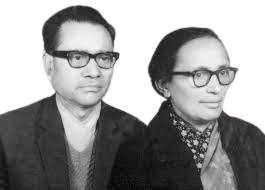
The man Late Dharma Ratna Yami is a true political (army ????) and the man who fought against Brahmanism (caste discriminations, untouchability etc) was of similar (personality ???) as Dr. Ambedkar (B. S 1891 – 1956) of India( who was the person who led writing constitution and fought against same cause in India).
He was second child of father late Bhawani Ratna Tuladhar and mother Devi Maya Tuladhar and born on 2nd Bhadra 1972 . His childhood name was Juju Bhai.
Although he was the grand son of a royal merchant late Ratan Das Tuladhar (died s. 1922) , since childhood he had to grow up in that family who landed up in street in penniless state because of the crude tyrant prime-minister Chandra Shamsher (ruling period 1901-19). Like other elder brothers (Ash Ratna, Man Das and Harkha Das) Bhawani Ratna also landed up in Kalimpong in the search of suitable job.
While doing business of cycle and cap he came across one business man Gyan Man Tuladhar who is the second son of renowned business man Dharma Man Tuladhar (B.S. 1918- 1994) of Nepal. Dharma Man used to be trustable friend of his father Ratna Das. As per the good advice of Gyan Man Tuladhar, Bhawani Ratna proceeded with him and he started working in Farijong business center at Lhasa. Regarding the character of Bhawani Ratna ,renowned mahapandit Rahul Sanscritiyan of India described him as “ Bhawani Ratna was a spent thrift on useless things, however ,he was very honest and labourous in nature. After some period of time Dharma Man recruited him as the chief staff in his business center where Bhawani Ratna spent eleven years (upto 1934).“
Mahapandit Rahul Shanscritiyan mentioned that Ratna Das reached bankruptcy also due to the mistakes of his own sons. And also said that “that time the business trade Centre in Tibet was performing and could have sustained the business in long term, however, the eldest son Asha Ratna spoilt the business because of his habit of taking drugs. Not only the elder son was a hindrance to the well functioning of the business growth, Bhawani Ratna was also spend thrift and spoiling the business growth too. He had kept mistress secretly from different caste. His negligience toward wife Devi Maya (mother of Dharma Ratna) made her suffered a lot. Poor lady had to go through painful sufferings and lived at her maternal house along with two small sons.
Rahuljee described in his book that Dharma Ratna had spent painful childhood with his grand mother (maternal). He didn’t receive any love. Grand mother was all alone. In order the meet the daily hand to mouth of the family he was forced to work with Tamot Tamrakar for earning rupees five per month as salary instead of going to school at such tender age. He was only eight years old at that time. He worked there only for three years because there was a communal riot between Bajracharyas and Tuladhars. The reason behind was arrival of one gentle man called “Kyanchya Lama “ in Nepal in the year 1981 in the month of Falgun. There was a serious dispute over whether it was right or wrong to respect the monk by touching his feet. Dharma Ratna was on the side of touching the feet and Tamrakar community was against it, so he lost his job because of this dispute.
After this dispute he worked with Khardar Laxmi Prasad at rupees 3.00 per month as salary for stitching hand-made cotton shoes. After working for a year, he came across a very close servant of his grand father ,as discussion with him Dharma Ratna got contract of shoe production and he started earning rupees 35 per month. He was sustaining his file including his family members through this business. Suddenly his business dropped because of the import of cheaper Japanese shoe. His hand made cotton shoe became expensive and he lost his business in the market. He became unemployed again. At that time he was seventeen years old.
He decided to move to his father in Tibet instead of hanging around uselessly in Kathmandu. He stole Rs. 155 from his grand mother which himself had given her for saving out of his own earnings. He started his journey towards kalingpong. He was not aware of direction of the Kalimpong at that time. So, he asked the direction of the road towards Kalimpong to one shopkeeper at Thankot . The shop keeper felt very pity over the boy and advised him to return back home. He explained to the shop keeper telling him that his father works in Tibet. The shop keeper even got more surprised and tried to convince him to return back to Kathmandu informing him that he had to travel by bus and train, he can’t travel.
Dharma Ratna didn’t take the advice of the shop keeper and proceeded further by climbing the Chandra Giri mountain with lot of courage. That time he could not even know how to communicate in Nepali, the national language. Somehow with lot of difficulty he managed to reach Kalimpong. There he stayed with merchant Dharma Man and proceeded to Tibet. He joined his father Bhawani Ratna Tuladhar and started working as a staff in that business shop. This was in the year 1933.
Dharma Man had shop at Lhasa called ‘Chhu-Shing-Shya’. In the beginning of 1934 Dharma Ratna went to Kalimpong and Calcutta as a part of his business assignment of merchant Dharma Man. At Kalimpong while on his way to Tibet, he met the famous literary figure Pandit Rahul Sanskrityan , at that time he was a stherbirbadi monk. He was on his way back to Tibet to complete his remaining search of ancient cultural Buddhist doctrines. He also met another monk Dhamma Lok(Das Ratna Tuladhar as his original name ) in kalimpong who was on his way to Tibet to see the living Manjushree of China . He started second journey to Lhasa in last week of April 1934 with two Buddhist monk.
He feels grateful for having had this golden chance to travel with such political and religious personality like Rahul sanskrityan during his one month journey to Tibet. In Tibet he also came across a person called Ananda Nand from Chita Baun (Bangladesh) a great revolutionary figure who fled his country under very risky environment. He mentored Dharma Ratna on various national as well, as international issues.he educated him on issues of master and servant relations and totally transformed Dharma Ratna into a hardcore revolutionary mind.
In 1939 Dharma Ratna’s father committed suicide. Since Dharma Ratna disclosed the death of his mother to his father Bhawani Ratna, his father stopped getting sleep in the night. He committed suicide with the help of one French pistol near the corner of hishousein a dark room. Dharma Ratna came rushing back into the room and the body had already become very cold.
Before commiting suicide Dharma Ratna had left behind three letters saying
“ I commited suicide out of my own wish. I licked the diamind dust initially amd then I drank offing cooked in oil., however I could not die. Now I am ending the life by sing pistil. No one should be held responsible for my death.”
Dharma ratna got the shock out of his life loosing his one and only one life support.he then decided to leave Tibet. He came back to kalingpong after carrying Rs. 800/ out of his own earning and Rs. 2500/ out of his father’s earnings.
During his few months stay at Kalingpong he wrote one novel ….named samaj ko yek jhalakand got it published through s. d. p. o upasakin kalingpong. In this book he has expressed details on crude and cunning behavior of exploiters of the society.after the publication of this book he collected few revolutionary books in 1994 to Kathmandu(Kantipur).
After reaching Kathmandu he statedchis business by opening a handmade she shop with a capital investment of Rs. 3000/-Within short span of tme he faced conflict with his business master , felt humialatedamd frustrated after experiencing in human behavior from the business owner, he left for Trishuli with Rs. 10/- and half Tola gold in his pocket.
In Trishuli he changed in to disguise of priest and he moved towards Betrabati . After reaching Betrabati Chhen Chhen Monastery , he tried to learn from a monk and he started teaching children. However, he didn’t get peace of mind even there and didn’t get satisfied too hence came back to Kathmandu. Then he started of his life’s mission of ending the Rule of Ranas by spreading awareness campaign and started aligning with like minded people . To sustain life he opened one Soap Shop in 1995 at Asan Tole (Bhotahiti). Regarding this shop one popular journalist Devendra Mumukshya says :-“ At Kathmandu Ashan Bhotahiti Shop Yamijee’s shop used to be a place to dump the eye wash for distracting the secret intelligence of Ranas. Inside shop the place used to be a place to have a meeting with revolutionaries and pamphlets, parcha, letters passing and receiving busy centre and same shop was used for organizing activities for revolutionaries of three cities( Kathmandu, Bhaktapur and Lalitpur) .This way the shop of Dharma Ratna Yami was projected as a shop of soap for clearing the dirty cloth and removing smells , inside the same shop was used for young revolutionaries to clear up nations dirt.
Regarding this shop Khadka Man Singh Basnet (who is the founder member of “Prachanda Gorkha” a political party (established 1988) , who stayed in jail for 20 years(up to 2007) said in his own word “Because of the simple nature , smiling face, sweet talk and deep thinker not only the customers of the shop used to gather around, but also large numbers of people who were interested in improvement and progress also started gathering around in that shop.
In that shop there used to be heavy debate on the current exploitation and inhuman behavior and injustice. The democratic movement of India, discussion about the world in different countries regarding political , economic and social sector developments including ups and downs of revolutional movements in most of the countries. In the same shop, the current Nepal congress supreme leader Ganesh Man Singh Shrestha,
Martyr Gangalal Shrestha( B.S. 1975-97), political, social and Nepal Bhasa Literature renowned figure Prem Bahadur Kansakar (Nepal Sambat 1037-1112) etc started developing close relations. Later year B.S. 1997 in the month of Kartik , Nepal Parishad(estd. 20th jestha 1993) their numbers including other political ,social and from educational sectors were all arrested including Dharma Ratna Yami.
Among around 200 arrested most of them were released after interrogation (Safai ?) and paying penalty
After that 25th Poush ,1997 , there were around one hundred insid jail on 6th Magh 1997, main people consisting of one third of the total , rest were released. For the remaining main gang of prisoners on 7th Magh 1997 Monday, a special court bench hearing was organized to decide on the decision on penalizing case prisoners.
In that bench, king Tribhuvan, British agent-Bentham, Shree 6 Bada Guruju including Brahmin Royal Pandits, including high level Ranas, beaurocrats, army heads. Prime minister Shree 3 Juddha Shamsher (Ruling period 1932-1945 A.D.) made entry into bench, one administrator from Juddha Samsher side read out written document. In that paper out of about 200 prisoners many of them were released after safai? and paying heavy penalty charges. After 25th Paush 1997 these people locked up inside Singha Durbar only one hundred were left over. After 6th Magh 1997 one third declared as key players were imprisoned releasing the remaining.
Sukra Raj Shastri and Pandit Muralidhar were described as the main key fault(Dosh)?.
After that paper which consisted of charges against remaining people was read out. That time those guilty (Aaparadhi ?) (one third remaining ones) were made to sign attendance in Gaddi Baithak. After making hearing about
Penalty , the court waited to hear about the statements from rest of the chiefs. Shree 3 Juddha Samsher started looking at the assembly member present in the hall. After seeing the pin drop silence Juddha Samsher asked the person next to heir Shree 5 Tribhuvan(B.S. 1963-2011) “ These people (Royal protestor) who are eyeing at the thorn have to be penalized , his majesty?.”
Shree 5 Tribhuvan politely replied “ will need to give moderate penalty” .Then Juddha Samsher looked at Royal priests and demanded their advice. Among Royal Priests specially Somnath Sigdel(B.S. 1941-2026) pleaded in front of Juddha Samsher “His Majesty! According to Dharma Shastra penalty ko Tajbij? ”
In Dharma Grantha what and how penalty shall be given is clearly spell out Brahmin Royal priests were very sure and they didn’t have to elaborate anything they just had to explain the meaning of shloke? As
Among 35,36 people Juddha Samsher had special grudge against Shukra Raj Shastri and was extremely angry against him.
Meaning He shouted and scolded using words “ Newar, jyapu,peasant…”. After listening to long scoldings Martyr Sahid Sukra Raj Shastri(B.S. 1950-1997) intervened Juddha Samsher and said “ I don’t need to say anything if only you Royal highness had the right to say and we don’t have any right to express but if it is a
Sabha? Assembly all those who are present should be given opportunity to express this feelings . If your highness wishes to kill me you are welcome to kill me and I am ready to die. I am not scared of death however I would like to ask one question to you your highness and those members present in that assembly “ What have I done such a big crime? That I get death penalty . Please clearify this.”
During my stay inside jail( B.s. 1995 since magh month) I have been charged of several allegations. How do you justify all those charges? . After other things spell out in Royal doctrine regarding dfferent level of penalties was discussed however your responsibility of serving the citizen Royal doctrine also has mentioned penalties issue should have been raised.
They felt no need of responding to the questions raised by Sukra Raj Shastri using the clause of Royal(Raj shabha ?) Supreme Aakhtiyar? Right whatever he said is the right one. He could declared Shree 3 Maharaj told the attendees of staffs of the court ordered “Give extreme penalty to these people” and he returned to his palace in Balaju.
Shree 5 Tribhuvan also returned to his royal palace British Regident also returned from Singh Durbar. This way without complete proceeding of court haearing the supreme court adjourned. After half an hour the session resumed under the current the chairmanship of commander in Chief Padma Shamsher , Mohan Samsher, Keshar Samsher, Aanand Samsher, Nara Samsher were
Including Jungi Aadalat ?staff Ratna Man Kaji(grandfather of Ganesh Man Singh Shrestha) were present. The declaration (faisala ? ) paper was in the hand of Ratna Man Kaji hover other person read out the document. The penalty of remaining people were as per follows
1) People with property confestication death penalty:-
Sukra Raj Shastri, Dharma Bhakta Mathema, Dash Rath Chanda, Gangalal Shrestha and Purna Narayan Pradhan. The penalty of Purna Narayan Pradhan’s death penalty was later on converted to life imprisonment.
2) Penalty as per Mutthi Damal ? and property confestication list
Tanka Prasad aacharya and Ram Hari Sharma
3) Life imprisonment with property confestication
Fattebahadur Singh, Compounder Chandra Man Sainju, Chiniyalal, Govinda Prasad Upadhya, Puskar Nath Upreti, Mukunda Upadhya, Chandramani Upadhya, Balbahadur Pandey and Ganeshman singh shrestha, Hari Krishna Shrestha, Murali Dhar Sharma
4) Penalty list with 18 years jail sentence with property confestication :-
Jeev Raj Sharma, Dharma Ratna Tuladhar, Kedar Man Byathit, Chandra Man Maskey
5) 12 years imprision list
Siddhi charan shrestha, Dhruba nath dwivedi, Ganesh Raj Shrestha, ST. Marichman, Lepten Ram Das Khatri, Katak Bahadur Nakarmi
6) 6 years imprision list
Ramji Joshi ,Chatta Dhar Tuladhar( “Hrhidaya”), Purna Bahadur MA, Fanindra Raj Hamal
7) 3 year imprision list
Khardar Bhupal Man Singh Shrestha, Buasjee Sharma, Jyoti Prasad upadhya, Jayanti Nath Upadhya, Nutan Raj upadhya,
Like this In B.S. Dharma Ratna Tuladhar was also adjourned with penalty of 18 years with property confestication.
Death sentence awarded 5 people (Royal prisoner besides these people next day. Rest of the prisoners were taken to Bhadragol jail(Central jail). They were kept in 4 rooms. Dharma Ratna Tuladhar , Ram Hari Sharma, Tanka Prasad Aacharya, Chittadhar
Tuladhar and Govinda Prasad upadhya were kept in one room. They were all aware of the behavior of Dharma Ratna Yami. According to the article published by Govinda Prasad Upadhya in memory of Dharma Ratna Yami, Mr. Govinda who was in association with Raja Parishad from B.S. 1997 until 2007 wrote
“Dharma Ratna Yami with always will smiling and humorous face and very fond of gossiping and he loves throwing humorous gossip . After six month in kaal Kothari ? was built and we were shifted to a separate compound. There also Dharma Ratna used to be with Ram Hari Sharma and Tanka Prasad Aacharya . Inside Kaalkothari he too spend life like others.
https://www.facebook.com/PoliticianDharmaRatnaYami/